Sourcing Tools for Recruiters Got Faster. Shortlist Confidence Didn't.
Sourcing tools for recruiters find people faster, but trust in the shortlist lags. Use the 3-line Vouch Card to build shortlists you can defend.

Knoot Admin
October 20, 2026
Content
Why sourcing tools for recruiters make search faster and trust slower
The verification tax
A better search engine, a worse index
Nobody can defend number three
Your checking time is spread evenly. Risk isn't.
The Vouch Card: build a shortlist you can defend
Proof, Gap, Fit
Proof: one thing you verified
Gap: one thing that doesn't add up yet
Fit: one must-have, in the hiring manager's words
The Knoot Angle
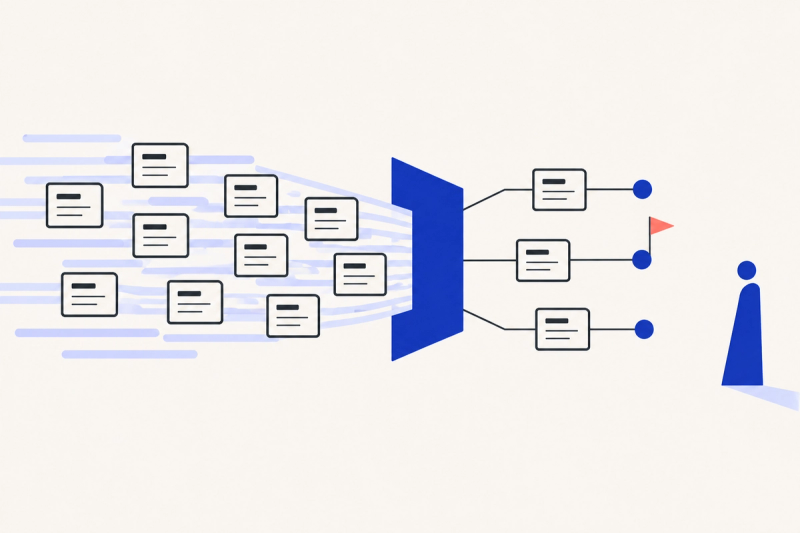
Thursday, 4:40 p.m. The hiring manager pings you: "Who's on the Senior Platform Engineer shortlist, and why?"
Sourcing tools for recruiters found 14 strong profiles in twenty minutes. You've spent the ninety minutes since then checking them. LinkedIn title versus CV dates. Claimed stack versus GitHub. Two gaps you can't explain.
You type "he looked good" into Slack. You delete it.
This week HR Dive reported a TestGorilla survey of U.S. talent professionals. AI helped most of them find people faster. Many said it didn't make them trust those people more. Some said trust dropped.
Faster search isn't a faster hire. It's a faster pile.
Why sourcing tools for recruiters make search faster and trust slower
Search got cheap. Confidence didn't. Four things quietly moved.
The verification tax
Every profile your tool hands you is a claim, not a fact.
Title says Staff. CV says four years. Two jobs overlap by seven months.
Find in 2 minutes + verify in 90 = a 92-minute search.
You didn't save the time. You moved it to the back of the process.
A better search engine, a worse index
TestGorilla's CEO put it neatly: recruiters got "a better search engine and a worse index."
Same keywords. Same polished bullets. Same "drove cross-functional impact" in every third profile. The tool ranks them beautifully, because they all look like the role.
That's the trap. When everyone sounds right, the search works perfectly and tells you almost nothing.
Ranking isn't believing.
Nobody can defend number three
The hiring manager never asks how you found candidate three. They ask why candidate three is on the list.
"The algorithm liked him" is not an answer.
You can't say "trust me" to someone who is about to spend three weeks of interview time on your list. A shortlist you can't explain is just a longer list with your name under it.
Your checking time is spread evenly. Risk isn't.
With no signal for where to look, you verify everyone the same. Ninety minutes, split flat.
The clean profile gets the same forty minutes as the shaky one. Meanwhile the one real red flag, buried on page two of a CV, gets a skim.
- Clean profile, over-checked.
- Shaky profile, under-checked.
That's not diligence. That's rationing without a map.
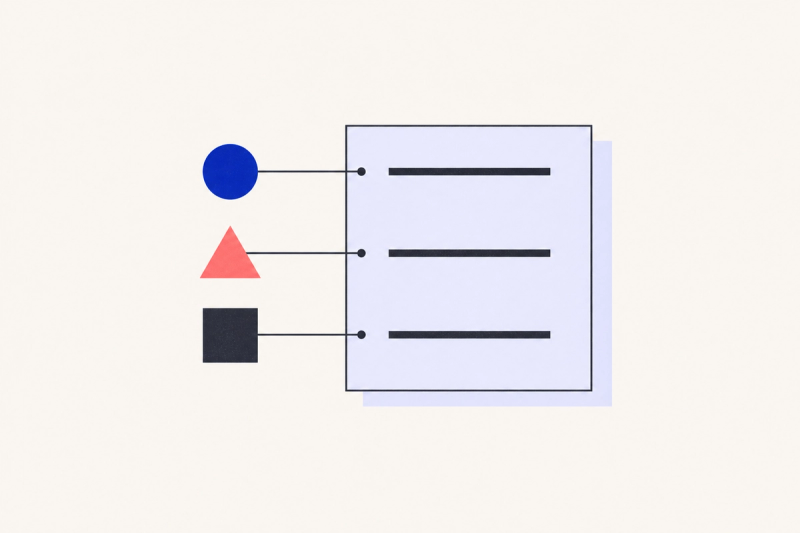
The Vouch Card: build a shortlist you can defend
You need a pen and a spreadsheet. One card per candidate, three lines, written before anyone touches the shortlist.
Proof, Gap, Fit
Proof: one thing you verified
Not "strong background." One checkable fact. "Led the payments migration at Acme, confirmed in the CV timeline and the repo history."
No proof, no card. If you can't find one thing to verify, you haven't met this candidate yet. You've met their profile.
Gap: one thing that doesn't add up yet
Every real candidate has one. A six-month hole. A stack claim with no project behind it. Write it down.
A card with no gap isn't clean. It's unexamined.
A Gap you found is a question you can ask. A Gap you missed is a surprise in round three.
Fit: one must-have, in the hiring manager's words
Not your paraphrase. Copy the exact line from the JD. "Owns on-call for a payments service." Then point to the CV line that answers it. If the line isn't there, that's your Gap.
No card, no shortlist. Then spend your verification time where the Gap lines point, ten minutes each.
Here's what number three looks like on a card. Proof: shipped the migration, confirmed in the repo. Gap: two jobs overlap by seven months. Fit: "owns on-call for a payments service," answered by the second Acme role. Now the Slack message writes itself: "Strong on payments, one timeline question I'm resolving Friday."
Run Thursday again. Fourteen profiles, fourteen cards. Eight come out clean. Six have a Gap worth a call. You spend the ninety minutes on six people, not fourteen. When the hiring manager asks about number three, the answer is already written.
Confidence isn't a feeling you get from speed. It's a sentence you can say out loud.
The catch: fourteen cards is an afternoon. Nine open roles is a month of afternoons. The cards you skip on Friday are the shortlists you can't defend on Monday.
The Knoot Angle
Speed finds candidates. Reasons earn trust.
Sourcing tools for recruiters answer one question: who's out there? Nothing in the stack answers the next one: can I stand behind this person? That's the gap Knoot's AI Screening is built for.
It reads each candidate against the criteria you set for the role and returns a shortlist ranked by match, with a written explanation for every name. That's your Fit line, already drafted. It also surfaces risk flags: timelines that overlap, skill claims that don't match the experience behind them, numbers that look inflated. That's your Gap line, pointing at exactly where to spend your ten minutes.
It flags. It never rejects. You read the reasons, make the call, and walk into the hiring manager's Slack thread with a sentence you can defend.
Let AI show you where to look. You decide who to vouch for.
Content
Why sourcing tools for recruiters make search faster and trust slower
The verification tax
A better search engine, a worse index
Nobody can defend number three
Your checking time is spread evenly. Risk isn't.
The Vouch Card: build a shortlist you can defend
Proof, Gap, Fit
Proof: one thing you verified
Gap: one thing that doesn't add up yet
Fit: one must-have, in the hiring manager's words
The Knoot Angle