Knoot Drama

Knoot Town

Career

Skill Station

Podcasts

You Paid to Find This Candidate Last Spring. Now You're Paying to Find Them Again.

Your resume database already holds the candidate you're paying to find again. Use a three-step look-back routine to rediscover past candidates before you post.

Knoot Admin

Knoot Admin

October 13, 2026

Content

Why your resume database is a one-way door

The "no" has no label

Search starts outside, not inside

Memory is your only index

The math nobody runs

The Look-Back Rule: search your own pool before you post

1. Tag the no

2. Date the maybe

3. Search before you post

What this is not

The Knoot Angle

blog image
It's Tuesday, 9:12 a.m. The hiring manager pings you: "Need a Staff Data Engineer. Two weeks."
You open a fresh LinkedIn search. Sixty profiles in, one name rings a bell.
Maya. You interviewed her in March. She lost the final round to someone who accepted the salary first.
She wasn't a bad no. She was a timing no. And you just found her again by accident, after an hour of cold searching.
You're paying to source the same person twice.
Why does that keep happening?

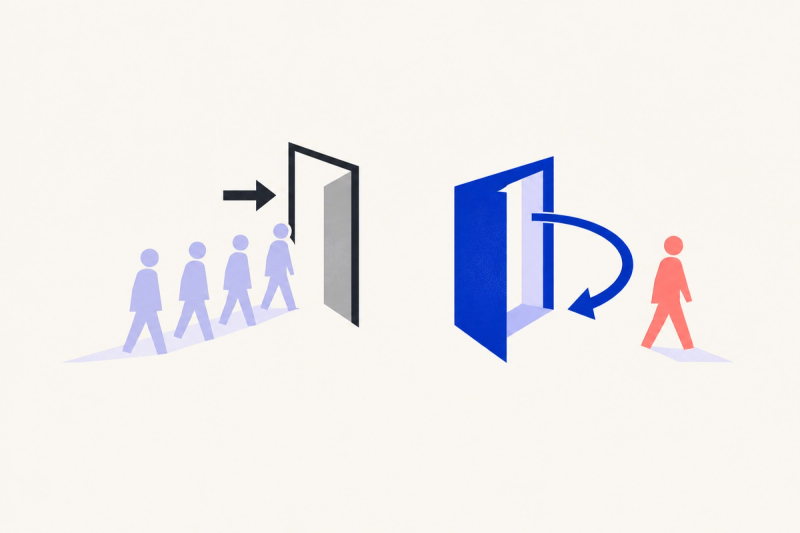
Why your resume database is a one-way door

The March req pulled 380 applicants. You screened them all. You interviewed eleven. You hired one.
Ten people you'd already found, read, and talked to went into a folder. Most of them will never be opened again.

The "no" has no label

In your system, Maya's status says Rejected. So does the candidate with the fake CV. So does the one who wanted double the budget.
Rejected = rejected = rejected.
Three very different stories. One flat word.
Timing nos are the cheapest hires you'll ever make. The candidate is vetted, was interested once, and is already in your system. But you can't tell a timing no from a dead end, so you treat them all as dead ends.

Search starts outside, not inside

A new req lands. You open LinkedIn. You open the job board. You post the role.
Your own CV database is the last tab you check. Usually it's the tab you never open.
Meanwhile every cold channel gets louder. Inboxes fill with AI-written outreach. Reply rates sink. The one list that hasn't gotten noisier is the one you already own, full of people who've heard your name.

Memory is your only index

You remembered Maya because she was strong. You forgot the forty others, and some of them were strong too.
Your memory is your real resume management software. It has terrible uptime.
Think of the Rejected folder as a lost-and-found nobody visits. Everything valuable in it sits behind a label that says "trash."

The math nobody runs

Say getting one finalist to the final round costs you six hours of reading, screening, and calls. Ten finalists is sixty hours.
Those hours vanish the moment the req closes. Unless those people stay reachable, you built a pipeline and then threw it out.
blog image

The Look-Back Rule: search your own pool before you post

Great recruiters treat every new req as the second time they've met the market, not the first.
You don't need new tools to start. A spreadsheet works. Three moves.

1. Tag the no

Give every rejection exactly one reason:
  • Timing
  • Salary
  • Seat taken
  • Level
  • Stack
  • Not a fit
Now "Rejected" splits in two. Some nos are final. Others are not yet.

2. Date the maybe

Every timing or level no gets a revisit date. Ninety days. Six months. Whatever fits the person.
A maybe without a date is just a no with better manners.

3. Search before you post

New req? Spend the first 20 minutes inside your own pool. Search the title. Search the adjacent skills. Message five past candidates before you spend a single sourcing credit.
Here's why it works. A past candidate already knows your company, your process, and your name. A cold message asks a stranger to care. A look-back message says: "We talked in March. The role I couldn't offer you then? A better one just opened."
That's the difference between sourcing and reconnecting.
Run it on Maya. Tag: timing. Revisit: June. Last contact: a thank-you note in April. When the Staff Data Engineer req lands, one search surfaces her. The message takes two minutes. You skip the sixty cold profiles.

What this is not

It's not blasting everyone you ever rejected. It's not a newsletter. It's five thoughtful messages to people you already know are good. Some will have moved on. Fine. The ones who haven't cost you two minutes each.
Do this for one quarter and your next hire stops starting from zero. Your pool starts compounding instead of expiring.
Three columns carry you far: reason, revisit date, last contact. The rest is discipline. And discipline is exactly where manual systems break, the moment you're juggling nine open roles.

The Knoot Angle

Hiring gets cheaper the moment your past work starts working for your future roles.
That's the idea behind Knoot's Private Talent Pool. It's your own candidate asset, not a spreadsheet of leftovers. Drop in up to 50 CVs at a time and they're parsed and structured in minutes, so a messy folder of old applications turns into profiles you can actually search. Keyword and filter search puts Maya one query away, not one memory away.
Then the useful part. Run AI Screening against the new role's criteria and your old pool gets a fresh ranking, with reasons for every match. The AI flags who deserves a second look. You decide who gets the message.
It doesn't second-guess who earned a yes. It just makes sure a good no doesn't stay lost.
Every CV has value. Even the ones you said no to.
Knoot.AI blog: You Paid to Find This Candidate Last Spring. Now You're Paying to Find Them Again.