Your Job Description Has 20 Must-Haves. The Role Has Four.
Your job description lists 20 must-haves; the role needs four. A job description keyword analyzer shows which requirements actually predict the hire.

Knoot Admin
October 01, 2026
Content
Why a longer job description gets you weaker candidates
When everything's required, nothing is
You stapled three jobs into one req
Your best candidate self-selects out
Nobody audits the list — they inherit it
A real scenario: "Senior Backend, 18 lines"
What a job description keyword analyzer actually does (and how to do it by hand)
Keep — miss it and they can't do the job on day one
Coach — learnable in the first quarter
Cut — it's there because you copied it
Weight what you Keep
The Knoot Angle
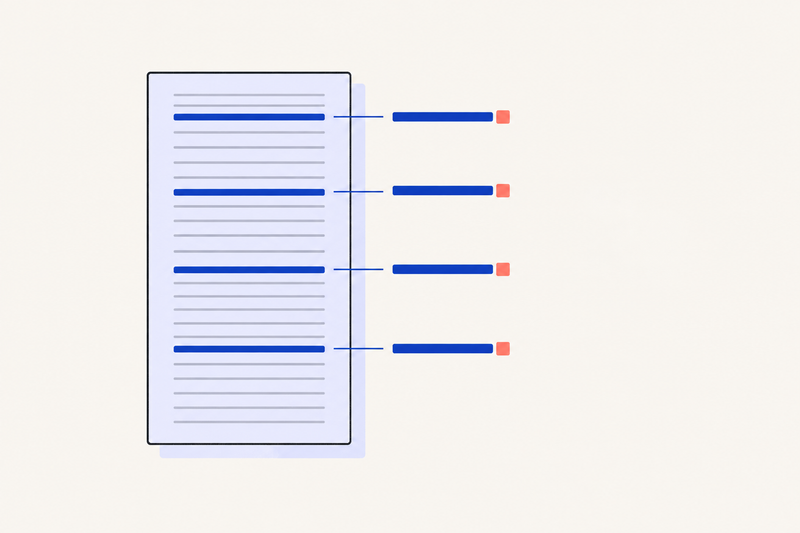
Open the last job description you posted. Count the lines under "Requirements."
If that number is 15, 18, 20 — you didn't write a job description. You wrote a wish list.
Here's the part nobody says out loud: every line you marked "required" is quietly turning away the people most likely to take the job. Your strongest candidate reads 20 bullets, spots three they're missing, and closes the tab. The average one applies anyway.
So you spend your morning filtering a pipeline full of the wrong people — and blame a "soft market."
The market's fine. Your job description is filtering for the wrong thing.
Why a longer job description gets you weaker candidates
A long requirements list doesn't make you look thorough. It makes you lose the exact people you need most.
When everything's required, nothing is
When all 20 lines say "required," none of them are prioritized.
You can't tell what the hiring manager actually needs. Neither can the candidate. And whatever screening comes next scores people against a criteria set with no weighting at all.
You stapled three jobs into one req
The JD wants someone who runs projects, designs the system, estimates the work, mentors juniors, and masters four tools.
You didn't describe a role. You described three people.
That candidate exists — they're just not applying to your req.
Your best candidate self-selects out
The person confident enough to notice they're missing three lines is exactly who you want in the room.
They're also the first to leave.
The one who stays and hits "apply" anyway is usually the one who read the list least carefully.
So the list does its filtering backwards: it waves through the people who skim and screens out the people who actually weigh the role before raising their hand.
Nobody audits the list — they inherit it
This JD is a copy of last year's JD.
Last year's was a copy of the one before. Each cycle, a hiring manager adds a line ("Figma a plus"), and nobody ever removes one. The list just swells — an inbox nobody cleans out.
A real scenario: "Senior Backend, 18 lines"
The JD lists 18 requirements: Java, Spring Boot, Kafka, K8s, AWS, CI/CD, 5 years in fintech, "Rust a plus," C1 English…
200 CVs land in three days. 160 mismatch on the first line.
You lose a morning sorting them. Final shortlist: three "safe enough" names.
The hiring manager looks it over: "Nobody's quite there."
The problem isn't the candidates. It's those 18 lines — nobody knows which one actually matters, so every candidate gets measured against all of them equally. A perfect fit who's light on line 14 scores the same hit as a weak fit who's light on line 2.
What a job description keyword analyzer actually does (and how to do it by hand)
Before you open the role, run every requirement through one question:
If a candidate had everything except this line, would you still interview them?
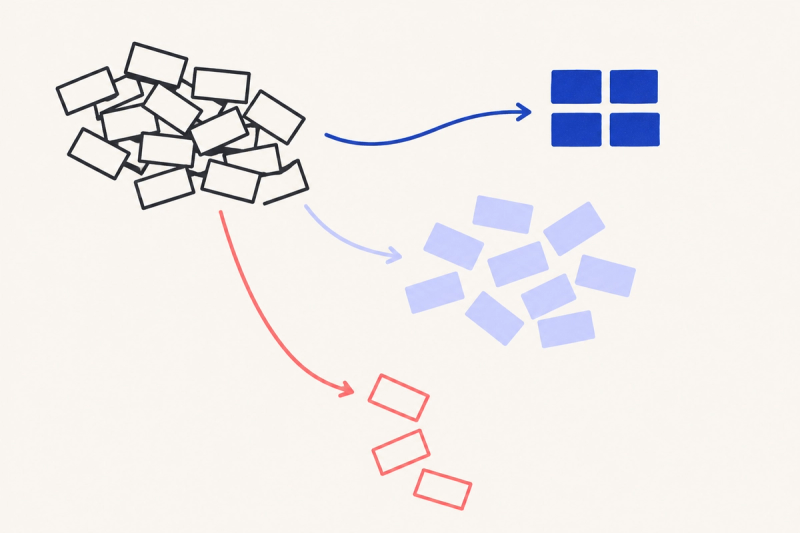
If the answer is yes, it's not a must-have. That simple. Run the test, and every line in the JD falls into one of three buckets: Keep, Coach, Cut.
Keep — miss it and they can't do the job on day one
This is the real must-have.
Without it, nobody can rescue the hire. Aim for 3–5 lines, no more.
For a backend role, "ships production code in an OOP language" is a Keep. "Exactly five years in fintech" probably isn't.
Coach — learnable in the first quarter
This is the genuine nice-to-have. Don't gate on it.
A strong hire picks up Kafka in two weeks. "Experience with tool X" almost always lives here.
Push it down to "preferred." Don't let it reject people at the door.
Cut — it's there because you copied it
The lines nobody remembers adding.
"Top-tier degree preferred." "Passionate about technology." "Thrives under pressure."
Delete them. They filter for nothing but candidate confidence.
Weight what you Keep
Once you've sorted the three buckets, stop treating every must-have as equal.
"Writes clean code" outweighs "holds the AWS cert." Give each Keep a percentage. Now you have a scorecard to screen against, instead of a list to scare people with.
The whole thing runs in a Google Sheet. No fancy tooling required — just the discipline to cut.
The Knoot Angle
A job description isn't just a posting. It's the unspoken contract between you and the hiring manager about what "the right person" looks like. When that contract is fuzzy, every step after it drifts.
That's what Knoot's JD Analyzer is built for.
It reads your JD and splits it into must-have, nice-to-have, and bonus — so you see the real criteria at a glance. Each one gets a weight you can edit or override: the AI suggests, you decide. That weighted set becomes the input for screening, so no CV gets scored blind. It even flags the contradictions already sitting in your JD — "junior" in the title, "7 years" in the requirements.
A job description is a wish list. JD Analyzer turns it into a scorecard you can actually hire from.
Stop making great candidates clear 20 hurdles. Know the four that matter.
Content
Why a longer job description gets you weaker candidates
When everything's required, nothing is
You stapled three jobs into one req
Your best candidate self-selects out
Nobody audits the list — they inherit it
A real scenario: "Senior Backend, 18 lines"
What a job description keyword analyzer actually does (and how to do it by hand)
Keep — miss it and they can't do the job on day one
Coach — learnable in the first quarter
Cut — it's there because you copied it
Weight what you Keep
The Knoot Angle