Job Applicant Screening Software Won't Block AI Agents. It Shouldn't Try.
AI agents now apply for candidates, and blocking them fails. See how job applicant screening software should flag, verify and leave the final call to you.

Knoot Admin
October 21, 2026
Content
Why blocking AI applications fails before it starts
You can't see who clicked submit
A tailored résumé isn't a fake résumé
Your funnel turns into a polish contest
The cost lands on you
What job applicant screening software should do instead: the 3C Triage
Check: does it match the role?
Cross-check: does it hold together?
Call: can they say it out loud?
The Knoot Angle
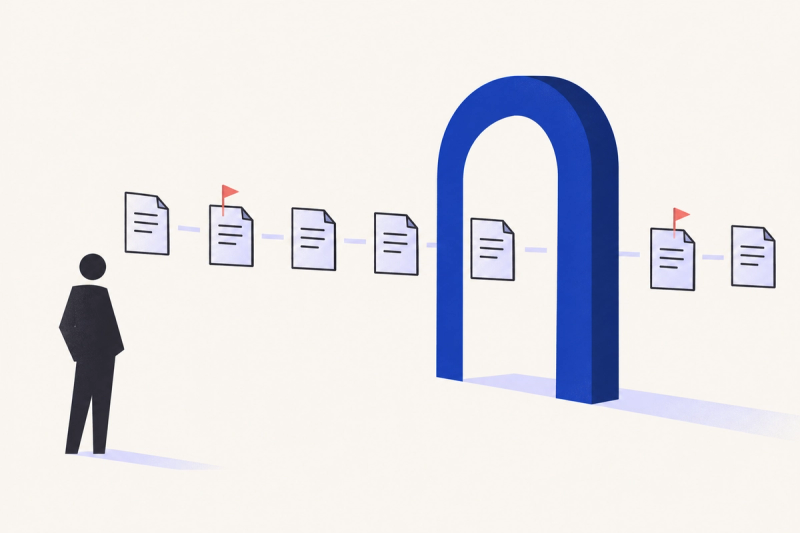
Ask a room of TA leaders this month what they'd do about AI agents that apply to jobs on a candidate's behalf, and a loud chunk answers the same way: block them.
Understandable. Also useless.
Monday, 8:40am. You open the inbox for your Senior Data Analyst role. 412 applications since Friday. Every résumé mirrors your JD down to the phrasing. Every cover letter is warm, specific, flawless. Seven came in within two minutes of each other at 3:07am.
Job applicant screening software can't block that flood, and it shouldn't try. The job isn't keeping AI out. It's knowing what's real once it's in.
Why blocking AI applications fails before it starts
Block-first policies feel decisive. They also rest on one assumption you can't verify: that you can tell, from the outside, who or what submitted the form.
You can't see who clicked submit
An agent fills in the same form a human does. Same fields. Same upload. Same button.
So your detection rule is a guess. Guess wrong and you reject the candidate who simply asked an assistant to handle the paperwork.
Say your rule catches those seven 3:07am applications. Four turn out to be one engineer who queued his applications before bed and let an assistant send them. He's also your strongest analyst in the pile, and he's now in the reject folder.
Blocking is a smoke detector that goes off for toast.
A tailored résumé isn't a fake résumé
Tailored CV = AI-assisted CV ≠ fabricated CV.
Plenty of strong candidates use a tool to match real experience to your JD. That's formatting. Fabrication is something else: a title never held, a project never shipped.
Ban the first and you'll still miss the second. Worse, you'll have trained your team to treat good writing as a red flag.
Your funnel turns into a polish contest
When every application reads perfectly, polish stops separating anyone. You end up ranking prose, not fit. The cleanest letter in the pile might belong to the weakest candidate.
- Same keywords.
- Same tone.
- Same confidence.
Then the hiring manager asks why the shortlist all sounds the same. You have no good answer, because it does. The signal you used to trust, effort visible on the page, is gone, and nothing has replaced it yet.
The cost lands on you
412 applications at 90 seconds each is over ten hours. A full day of your week, gone before a single conversation.
And the number only goes one way. Next month your competitors' candidates will have agents too. The recruiter who spends ten hours reading polished text isn't thorough. She's the bottleneck.
What job applicant screening software should do instead: the 3C Triage
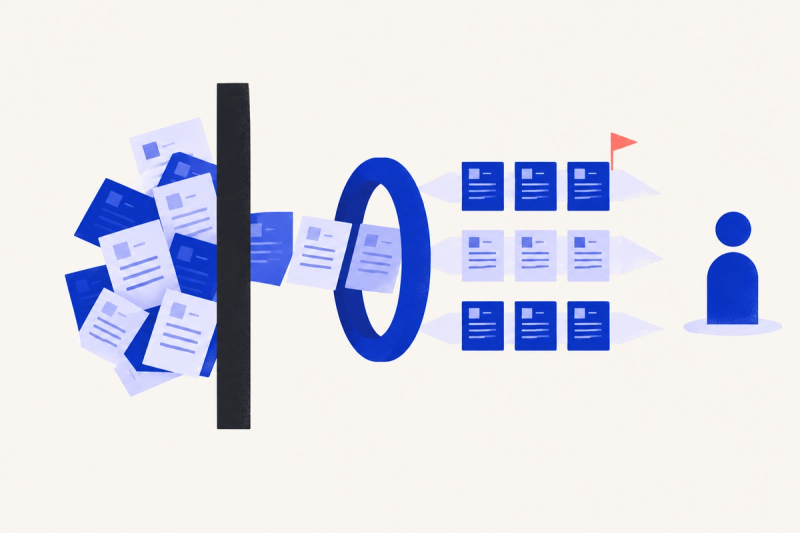
Stop asking "did a machine write this?" Start asking "does this hold up?" Three checks do the work. You can run them in a spreadsheet, one row per applicant.
Check: does it match the role?
Score every application against the four or five criteria that actually decide the hire, not the twenty in the JD. Split them into must-have, nice-to-have and bonus, and give each a weight. For the Data Analyst role, the real list is SQL fluency, a dashboard shipped to non-technical users, clear stakeholder communication, and ownership of one metric. Everything else is garnish.
Polish earns zero points.
Cross-check: does it hold together?
Read each application against itself.
- Overlapping dates.
- Senior skills, no project.
- Titles that leap.
- Claims the role can't support.
Flag it. Don't reject it. A flag is a question, not a verdict.
Picture the applicant who lists five years of "machine learning leadership" while every job title says Junior Analyst until last spring. That's not a rejection. That's your first question on the call.
Call: can they say it out loud?
Give flagged and top-scoring applicants a ten-minute call. A live conversation is the one signal AI hasn't flattened, and it takes ten minutes, not ten hours. Ask for one story from the résumé, told without notes: which metric, what broke, what they did next. Someone who did the work answers in a minute. Someone who only has the résumé circles.
Notice what's missing: a ruling on AI. The triage doesn't care whether a human or an agent typed the application. A real candidate with an assistant passes. A fabricated profile with a human typist doesn't. That's the point. You stop policing the tool and start testing the claim.
Check. Cross-check. Call. None of it asks who wrote the application. All of it asks whether the person can stand behind it.
The Knoot Angle
At the end of the day, you can't win a fight against the format. You can only get better at reading what's inside it.
That's the idea behind Knoot's AI Screening. It compares every applicant against the criteria you set from the JD, so screening is never blind. You get a ranked shortlist with a match percentage and a plain-language reason for each name. It also surfaces risk flags: timeline overlaps, skill claims that don't fit the experience around them, quiet exaggerations. It flags. It never rejects. You open the flag, read the reason, and decide.
Their AI applies. Yours flags. You decide.
Content
Why blocking AI applications fails before it starts
You can't see who clicked submit
A tailored résumé isn't a fake résumé
Your funnel turns into a polish contest
The cost lands on you
What job applicant screening software should do instead: the 3C Triage
Check: does it match the role?
Cross-check: does it hold together?
Call: can they say it out loud?
The Knoot Angle