You're Furious About Fake CVs. One in Five Jobs You Post Is Fake Too.
One in five jobs you post is a ghost job — and candidates know. Trust broke on both sides. The 3 Keeps framework to build a channel they still trust.
Knoot Admin
Knoot Admin
September 02, 2026
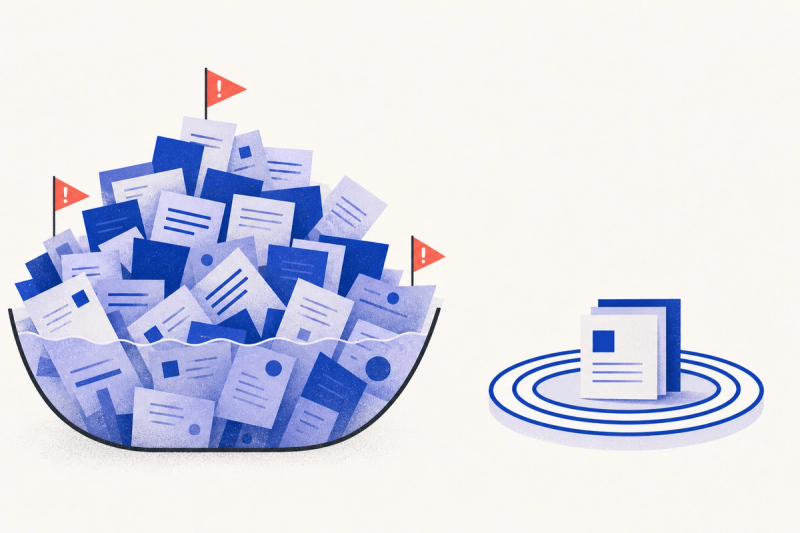
You're furious about AI-written CVs flooding your inbox.
Fair enough. But one in five jobs you post is fake too.
No real headcount. No intent to hire. Posted to look like you're growing, to keep a pipeline "warm" for the board, to scrape a competitor's salaries — or just never taken down.
Candidates know. They apply, they wait, they hear nothing. And next time, they don't bother writing a real CV either.
Here's the part nobody says out loud: trust between recruiters and candidates has collapsed — from both sides. The public job board, where you've always cast your net, has become a poker table where everybody's hiding cards.
So where's the channel a candidate still trusts you on?
Why the public hiring pond is already poisoned
Job boards used to be where supply met demand. Now they're where both sides suspect each other.
Your side:
- Jobs posted to signal growth.
- "Evergreen" reqs open all year, filling nothing.
- Jobs that exist to benchmark salaries.
- Jobs nobody took down after the hire.
Their side:
- AI-written CVs, sprayed by the hundred.
- Inflated experience.
- Cover letters generated in three seconds.
Both sides justify it with the same sentence: "The other side does it too."
That's the loop. You post a vanity job → candidates get cynical → candidates spray fake CVs → you tighten the filter → real people get screened out → you post more jobs to refill the pipeline.
Straight talk: You're not short on candidates. You're short on a channel candidates still believe.
A scenario you'll recognize
You need a Senior Product Designer. The job goes up on LinkedIn, on the boards.
400 applications in three days. 380 are AI spray. 15 are mismatches. 5 look real — and when you call three of them, the first thing they ask is: "Is this role actually real? I applied to another opening at your company last month. Waited six weeks. Nothing."
You lose the good ones not because they're weak. You lose them because your company name, on a job board, had already burned its credit before you dialed.

The 3 Keeps: building a channel candidates still trust
The fix isn't a sharper JD or a bigger ad budget. It's owning a private channel — one where you control both ends of the trust. You can run it on a spreadsheet.
Three rules:
Keep it Real — every name maps to a real opportunity
Don't stuff your pool to make it look big. Every profile you keep is a person you can actually call when a real role opens.
When you reach out, the opportunity exists. On a job board, half the offers are fiction.
Keep it Warm — check in even when there's no job
Trust isn't built in a 45-minute interview. It's built in small, regular, no-agenda touches:
- Flag a role that fits their profile.
- Share real product or company news.
- Congratulate a career milestone (if it's public).
You don't need 400 people. You need 20 who pick up when your name lights up the screen.
Keep your Word — close the loop, every time
Promised a follow-up? Follow up. Rejected them? Tell them.
It's the cheapest thing you can do and the rarest thing on the market.
A kind "no" today is a "yes" on the next req.
None of this is new. What's new is this: when the whole market is hiding cards, the one who keeps their word holds the biggest edge.
The Knoot Angle
In a market where trust has collapsed on the public channel, a recruiter's most valuable asset isn't the number of jobs they can post — it's the list of people who still believe them.
The problem is that list usually lives in fragments: a few CVs in Drive, a few names in your inbox, a few notes you can't find anymore. That's not a channel. It's debris.
Knoot's Private Talent Pool is built exactly for this:
- Every profile you've ever touched, gathered into one private, encrypted space only you can see — not a public board.
- Sorted by role, skill, and interest level, so next time you call the right person in seconds.
- Notes and interaction history attached to each profile — so you remember what you promised whom, and actually keep it.