Fake CVs in 2026 Are Written by AI. You're Still Reading Them With Human Eyes.
Fake CVs in 2026 are AI-written. You still read them with human eyes. How AI Screening flags timeline overlaps and skill fakes — while you make the call.

Knoot Admin
August 17, 2026
Content
Fake CVs in 2026 aren't dumb anymore
The "too-clean" CV
Timelines that don't math
Skill claims that outrun the career
It's not a skill gap. It's a time gap.
What you actually need: a second pair of eyes that never blinks
1. Compare against explicit criteria, not vibes
2. Flag. Don't auto-reject.
3. Explain. Don't score-and-hide.
The Knoot Angle
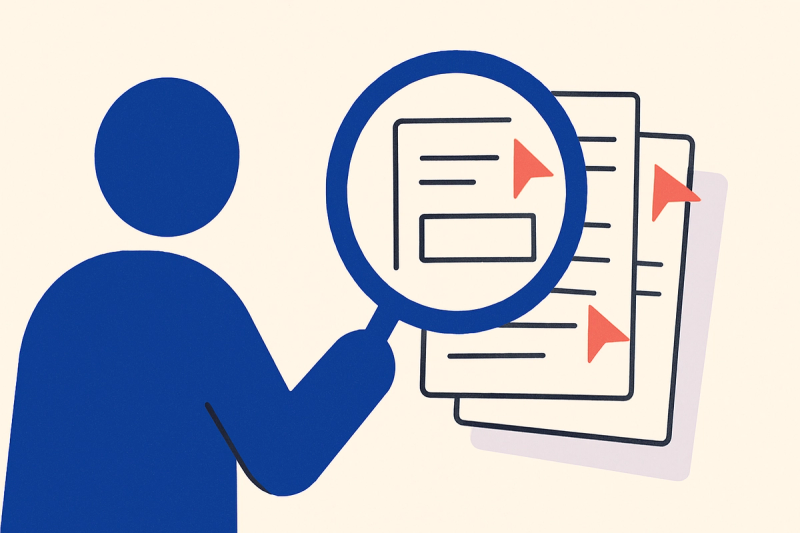
It's 9 AM. Your hiring manager needs 5 shortlisted Senior Backend Java devs by end of day. 50 CVs are waiting in the pipeline.
CV #12 looks clean. 8 years Java. Spring Boot, microservices, AWS. Every keyword matches. You add it to the shortlist.
You didn't notice the graduation year is 2020. You didn't cross-check the LinkedIn timeline showing 8 months at the previous company. You didn't clock that "Senior" was self-claimed, not a real title.
You didn't miss those because you're a bad recruiter. You missed them because no human eye reads 50 CVs a day without letting details slip.
That's the gap fake CVs live in. And in 2026, they've learned to hide better.
Fake CVs in 2026 aren't dumb anymore
Today's fake CVs are written by AI. You're still reading them with human eyes.
That's the asymmetry.
The "too-clean" CV
Paste a Senior Backend Java JD into ChatGPT. Ask for a matching CV. 30 seconds later you have a document with zero grammar issues, no career gaps, every keyword hit dead-on. The absence of friction IS the tell — if you catch it.
Timelines that don't math
Company A: 2020–2022. Company B: 2021–2024. That's a one-year overlap. Your eye slides past it at 30 CVs per hour. AI catches it in 40 milliseconds.
Skill claims that outrun the career
"5 years Kubernetes" — inside a 3-year total career. "Led a team of 10" — with a real title of Junior Engineer. Not rare. Just invisible under fatigue.
It's not a skill gap. It's a time gap.
You know how to check. You don't have 15 minutes per CV times 500 CVs a month. The math doesn't allow it.
What you actually need: a second pair of eyes that never blinks
This isn't about replacing recruiters with AI. It's about letting AI do the one thing human eyes shouldn't have to do 500 times a week: line-by-line cross-checking.
A good screening layer needs three properties:
1. Compare against explicit criteria, not vibes
Not "this one feels solid." Instead: "this candidate matches 82% of must-haves, misses one nice-to-have." That only works if the JD has been broken into weighted criteria first. Screening without criteria is screening blind.
2. Flag. Don't auto-reject.
This line does not move.
Timeline overlap? Flag it.
Skill claim exceeding career length? Flag it.
Pattern of "suspiciously perfect fit"? Flag it.
But never quietly delete the candidate. Push the signal to the recruiter with a specific reason: "Candidate claims 5 years Kubernetes, but LinkedIn shows first Kubernetes role starting 2023." You read the signal. You decide.
3. Explain. Don't score-and-hide.
"78% match" without reasoning is useless. You can't act on it. The hiring manager won't trust it. The candidate isn't treated fairly.
A good screening layer returns: what matched, what didn't, and what looks off. Read in 30 seconds. Decide in the next 30.
Those three properties together change the shape of the job. You're not reading 500 CVs anymore. You're reading 500 short explanations and deciding only on the cases that deserve a decision.
The Knoot Angle
AI doesn't decide who gets hired. AI just makes sure no fake CV slips through and no strong candidate gets buried.
That's the philosophy behind Knoot's AI Screening. It runs on the criteria you set through JD Analyzer, returns a shortlist ranked by match percentage, and flags each candidate with specific risk signals: timeline overlaps, skill claims out of proportion to experience, career-progression patterns that don't add up. Every shortlisted candidate arrives with an explanation — why they're in, why the flag is there, what to verify during the interview.
The critical part: there is no "auto-reject" button. There won't be one. Knoot surfaces the signal. You make the call. Because interviews are human work — only the 500-line cross-check part is what shouldn't burn your attention.
AI does the catching. You do the judging.
Content
Fake CVs in 2026 aren't dumb anymore
The "too-clean" CV
Timelines that don't math
Skill claims that outrun the career
It's not a skill gap. It's a time gap.
What you actually need: a second pair of eyes that never blinks
1. Compare against explicit criteria, not vibes
2. Flag. Don't auto-reject.
3. Explain. Don't score-and-hide.
The Knoot Angle