The Candidate on the Screen Nailed Every Answer. The Problem Is They Don't Exist.
Deepfakes and proxy candidates are slipping into remote interviews. Why chasing detection loses — and how a verified talent pool becomes your real defense.

Knoot Admin
September 14, 2026
Content
Why "catch the fake" is a fight you'll lose
You're judging a stranger in a single sitting
A remote candidate is an identity you've never verified
You trust your gut — and your gut is the target
Two scenarios you already recognize
Trust doesn't come from one interview. It compounds over time.
Log the proof
Reuse the proof
Rank by history
Refresh the ledger
The Knoot Angle
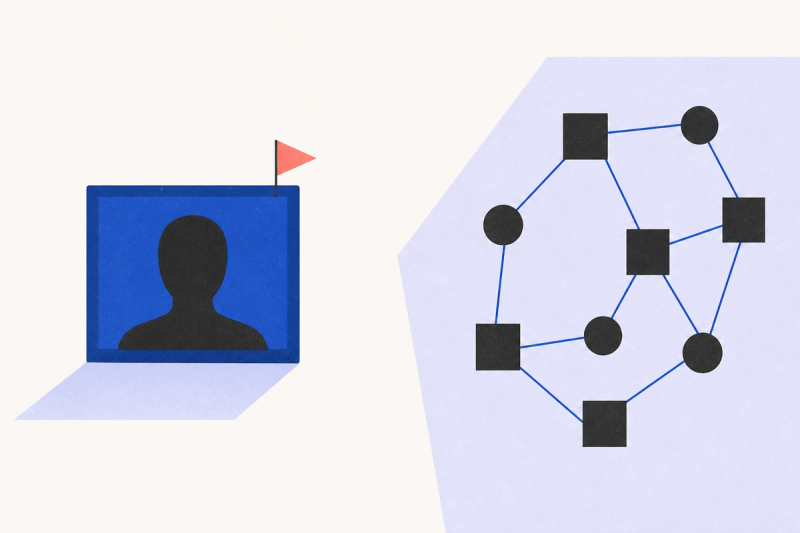
Two years ago, no recruiter had to ask this: "Is the person on camera actually the person on the CV?"
Now you ask it. Every remote interview.
The answers are smooth. The camera's a little laggy. The voice syncs to the lips… almost. References check out. But something's off — the eyes don't quite land on you, and there's a half-second freeze when you go off-script.
You wave it away. "Probably their wifi."
Deepfakes, cloned voices, proxy interviewees — they're not a sci-fi problem anymore. They're on your interview calendar this week.
And here's the uncomfortable part: your strongest filter isn't a deepfake detector. It's already having known who this person is.
Why "catch the fake" is a fight you'll lose
Every time detection gets better, the forgery gets better too. Faster than you can keep up.
You don't have a bank's budget for biometric verification. You've got 30 minutes, a Google Meet link, and your gut.
The real problem is somewhere else.
You're judging a stranger in a single sitting
The whole "is this person real, and are they any good" decision rides on one interview.
One time window. One camera angle. One carefully staged take.
That's the perfect stage for a fake.
A remote candidate is an identity you've never verified
A Senior Backend Engineer, fully remote, applying from a city you'll never visit.
Clean CV. GitHub with commits. LinkedIn, 500+ connections.
All of it can be spun up in an afternoon.
You trust your gut — and your gut is the target
Good recruiters pride themselves on reading people. Deepfakes are trained to beat exactly that instinct.
The sharper you are at reading a room, the more precisely the fake is built to fool you.
Say it plainly: you're not interviewing a candidate. You're interviewing an avatar. And an avatar costs nothing to make.
Two scenarios you already recognize
"The interview that was suspiciously perfect." You screen 8 people for one remote role this week. Three have that odd audio lag. One freezes when you ask something off-script. You cut them — but you're not sure you cut the fake, or cut a real person with bad internet.
"The person hired isn't the person who showed up." A candidate sails through the loop. On day one, something's off — the speech, even the face. The person you interviewed and the person at the desk aren't the same.
Both share one root: you started the relationship at zero. No history, no proof, just 30 minutes and a leap of faith.
No track record. No prior contact. Just a face and a story you have no way to check. That is the whole problem in one line.
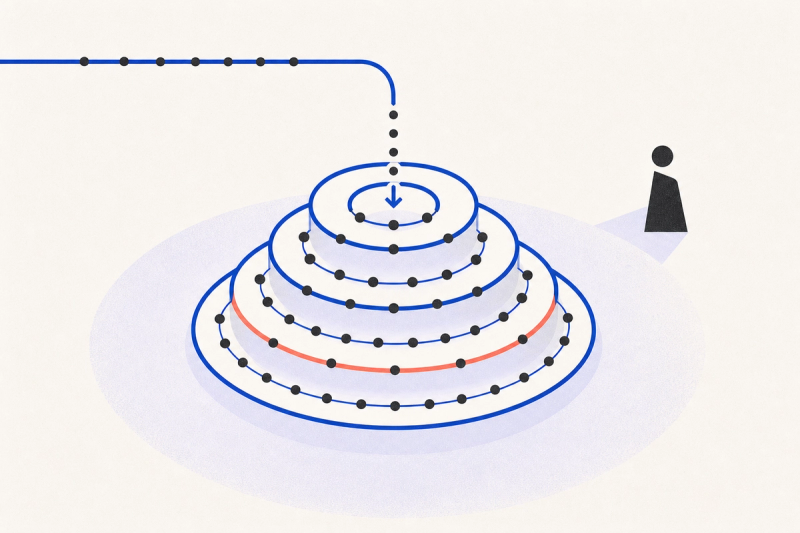
Trust doesn't come from one interview. It compounds over time.
If you can't prove someone's real in 30 minutes, stop trying. Change the question.
Don't ask, "How do I verify this stranger?"
Ask, "How do I make sure next time, I'm not starting with a stranger at all?"
The move: build a Trust Ledger. Every time you actually engage a real person, that's a deposit. Over time you hold a group of candidates whose realness is already proven — not re-guessed on every hire.
Log the proof
Did you meet them in person? Video call, face clear? Came through a referral you trust?
- Source: referral, met offline, ex-colleague
- Identity verified — yes or no
- Notes from a real interaction
Reuse the proof
Someone you've verified once doesn't need verifying again.
Verification is expensive. Do it once, bank it, and never pay that cost for the same person twice.
A candidate you've actually worked with beats a 95% match you've never met.
Rank by history
When a role gets urgent, pull from the ledger first, strangers second.
Real history beats a match score on paper.
Refresh the ledger
A pool of real people is only worth something if you can still reach them.
Keep them warm — so when you need someone, you call a known name instead of an avatar that just showed up.
You don't need an anti-deepfake system. You need a group of people you never have to ask, "is this one real?"
The Knoot Angle
When identity can be faked in an afternoon, a recruiter's only defensible asset is the relationships they've verified over time. Not a fraud detector — a pool of people you already know are real.
That's exactly what Knoot's Private Talent Pool module is built to hold.
You keep every candidate you've met, interviewed, and verified in one place — not scattered across Drive folders and old email threads. The interaction notes and history sit right next to each profile, so you know who you met, where, and how you confirmed they were real. When a new role opens, you shortlist from people you've already vetted, instead of opening the door to strangers you can't verify.
Private Talent Pool doesn't decide who's real for you. It just makes sure that next time you hire, you're not starting over with a face on a screen.
Fakes get cheaper by the day. A real relationship can't be forged.
Content
Why "catch the fake" is a fight you'll lose
You're judging a stranger in a single sitting
A remote candidate is an identity you've never verified
You trust your gut — and your gut is the target
Two scenarios you already recognize
Trust doesn't come from one interview. It compounds over time.
Log the proof
Reuse the proof
Rank by history
Refresh the ledger
The Knoot Angle