Your Candidate Evaluation Software Has an Opinion. It Shouldn't Have the Final Word.
AI candidate evaluation software can rank every résumé in seconds. The teams winning with it never let the software make the final call. Here's why.

Knoot Admin
October 02, 2026
Content
The quiet way automated evaluation goes wrong
It became a vending machine for shortlists
The 600-applicant role you never actually read
Same score, no idea why
You stopped reading, so you stopped learning
The tool got blamed, then shelved
Rank, Reason, Rule: keeping the human in candidate evaluation
Rank — let the machine do the pass
Reason — demand the why behind every score
Rule — you make the call, and your calls teach the system
The Knoot Angle
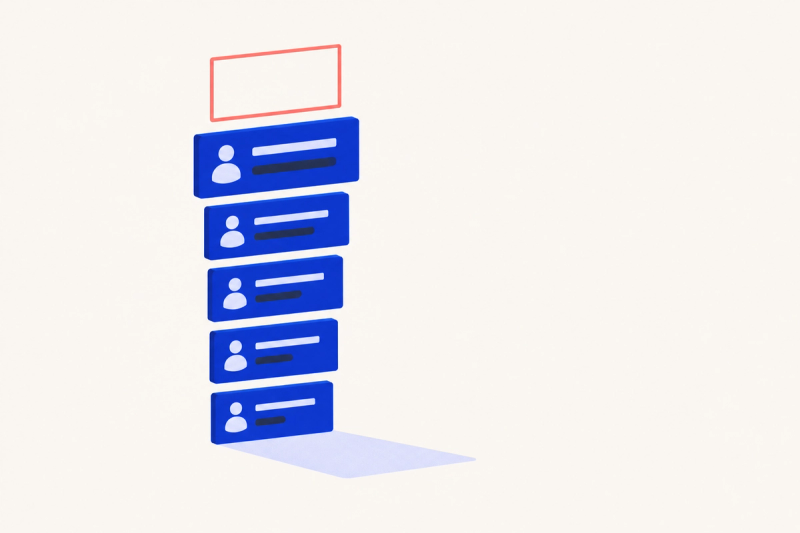
Your candidate evaluation software has an opinion about every applicant you've ever uploaded.
It ranked them. Scored them. Split the "yes" pile from the "no" pile before you finished your coffee.
That part is fine. That part is the job you wanted off your plate.
Here's the part nobody wants to say out loud: most teams didn't just hand the software the sorting. They handed it the decision.
The shortlist drops out, and nobody asks why. The tool said 82%, so 82% it is.
Somewhere between "rank these faster" and "just tell me who to interview," the tool stopped being a second opinion and became the only one.
Everyone bought candidate evaluation software this year. A lot of them have quietly stopped opening it.
The software didn't fail. The way people deployed it did.
The quiet way automated evaluation goes wrong
A black box feels efficient. It's also how good candidates disappear without anyone noticing.
It became a vending machine for shortlists
You feed in the JD.
A ranked list drops out.
What it kept in the back — the near-misses, the odd-shaped résumés, the people a score can't read — you never see.
You're not evaluating anymore. You're collecting output.
And output you don't question isn't a shortlist. It's a verdict you outsourced without meaning to.
The 600-applicant role you never actually read
You post a Senior Data Engineer opening. Six hundred applications land in four days.
The tool ranks them, hands you the top ten at 80%+, and you book interviews straight off that list.
You never opened applicant 340 — a self-taught engineer whose GitHub was stronger than anyone's résumé. The score didn't know how to read that, so it buried them at rank 290.
You didn't reject that person. You just never saw them. Different crime, same outcome.
Same score, no idea why
Two candidates come back at 80%.
One's a genuine fit. One gamed the keywords.
The number looks identical. The reasoning is invisible.
So you pick by gut again — the exact thing the tool was supposed to replace.
You stopped reading, so you stopped learning
Every shortlist you used to build taught you something about the role.
Hand that to a black box and the learning stops with it.
Six months in, the tool knows your roles better than you do. That's not leverage. That's dependence.
The tool got blamed, then shelved
One bad hire traces back to the AI, and trust evaporates overnight.
The team quietly goes back to manual, back to the exact overload the software was bought to end.
Candidate evaluation software didn't deskill recruiters. Recruiters who stopped reading did.
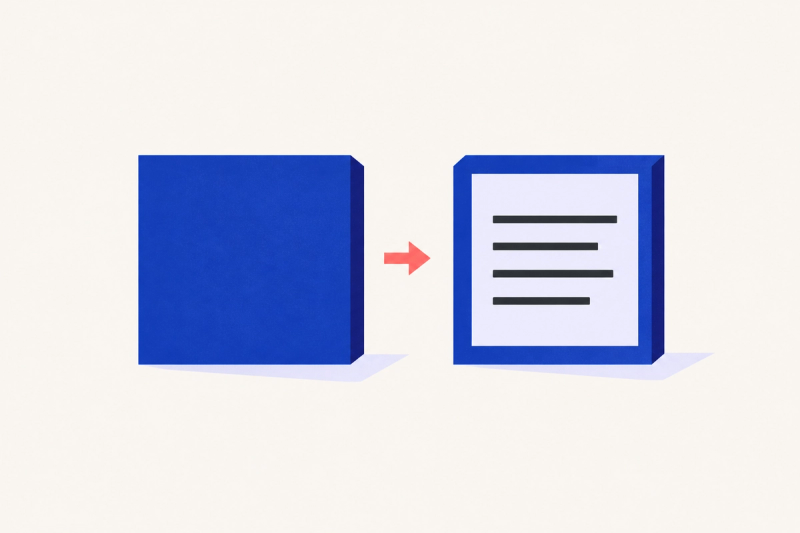
Rank, Reason, Rule: keeping the human in candidate evaluation
You don't need to rip the software out. You need to put yourself back in the loop. Three steps — and you could run them with a spreadsheet if you had to.
Rank — let the machine do the pass
This is the part AI is genuinely better at.
Feed it the criteria pulled from the JD. Let it score every candidate against them. No fatigue, no fog at the 400th résumé, no silent bias toward the names you recognize.
Let it rank. That's the two seconds you were promised, and the one part of the job it earns its keep on.
Reason — demand the why behind every score
A rank with no reasoning is a coin flip with extra steps.
For every candidate, you should see what earned the score: which must-haves matched, which didn't, what looked off.
A number tells you where someone landed. A reason tells you whether to trust the landing.
If the software can't show its work, it isn't evaluating. It's guessing confidently.
Rule — you make the call, and your calls teach the system
The software proposes. You dispose.
Nothing gets auto-rejected. You override when your judgment sees what the score missed — a career pivot, a non-obvious fit, a red flag the pattern didn't catch.
And every override is a lesson the next pass should remember. A system that can't learn from your corrections isn't a colleague. It's a vending machine with a login.
Rank belongs to the machine. Reason is the handshake between you and it. Rule is yours alone. Lose that last step and you don't have evaluation — you have a very fast opinion you're not allowed to question.
The Knoot Angle
The point of automated evaluation was never to think for you. It was to give you back the hours so you could think harder about the calls that actually matter.
That's the line Knoot's AI Screening is built around. It scores each candidate against the criteria your JD Analyzer already set — so it's never evaluating blind — and hands you a ranked shortlist with a plain-language reason attached to every match percentage. It flags the things worth a second look: timeline overlaps, skills claimed but never evidenced, experience that doesn't quite add up. What it never does is reject anyone for you. It surfaces the signal; you make the call.
That's the whole difference between a tool that makes you sharper and one that slowly makes you optional.
AI scores the candidate. You still own the verdict.
Content
The quiet way automated evaluation goes wrong
It became a vending machine for shortlists
The 600-applicant role you never actually read
Same score, no idea why
You stopped reading, so you stopped learning
The tool got blamed, then shelved
Rank, Reason, Rule: keeping the human in candidate evaluation
Rank — let the machine do the pass
Reason — demand the why behind every score
Rule — you make the call, and your calls teach the system
The Knoot Angle