Your Automated CV Screening Software Is Learning From Your Last Hire. Not This Role.
Automated CV screening software that learns from past hires repeats them. Use the 3E Check (Evidence, Echo, Exits) to audit any AI shortlist.
Knoot Admin
Knoot Admin
October 29, 2026
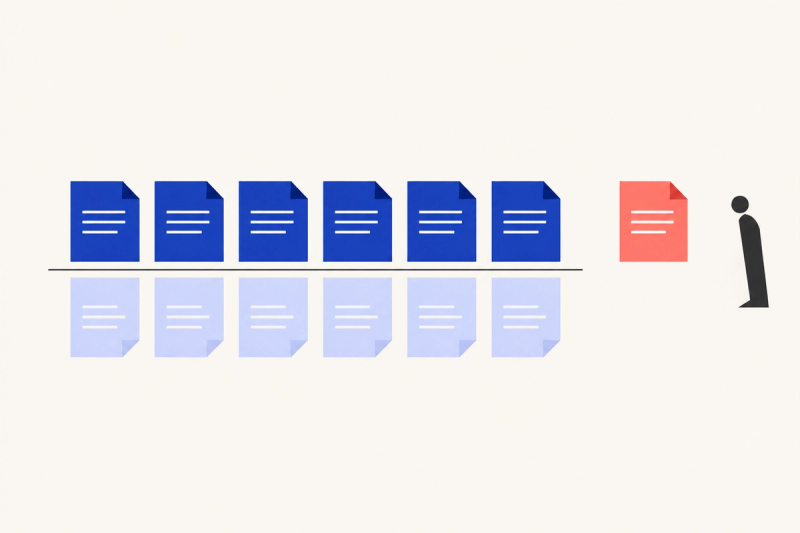
Monday, 9:10 a.m. You ask your sourcing agent for a Senior Product Manager. Forty seconds later: ten names, neatly ranked.
Nine come from retail. Seven live within fifteen minutes of your office.
You pull up your last three PM hires. Retail. Nearby. Same story.
The tool didn't find the best people for this role. It found people who look like the ones you already picked.
Automated CV screening software that remembers your hiring history will happily repeat it. So how would you even notice?
A screener with a memory is a mirror with a login
The newest AI recruiters all brag about one feature: they learn how each recruiter has hired before. Sounds smart. Until you look at what they do with what they learn.
Picture a team with nine open roles and a few hundred applicants on each. Nobody reads every profile, so everybody leans on the ranked list. The ranked list leans on you. That loop is where the trouble starts.
Habits become criteria
You picked retail candidates three times. On the fourth search, "retail" quietly becomes a requirement.
Nobody wrote it into the JD. Nobody approved it. It just showed up.
An invisible criterion is a criterion nobody can challenge. And every search after that starts from a slightly narrower pool than the last one.
Visibility becomes merit
Some tools estimate how likely a candidate is to reply, based on activity on one platform. Frequent posters and fast responders float up.
The person heads-down doing the job sinks. So does the person back from a career break.
Your shortlist is measuring who performs on a platform. Not who performs in the role. Those are two very different talents, and only one of them ships the product.
Two AIs, one handshake
Candidates use AI to polish the profile. The tool uses AI to score that polish.
Two machines are complimenting each other while you sign the shortlist.
Polished ≠ proven.
A rank without a reason
The score arrives. The explanation doesn't. "92% match" feels like an answer, but you can't argue with a number that won't explain itself.
Then your hiring manager asks, "Why isn't the product lead from that logistics scale-up in the top ten?"
And you say, "The system ranked her lower." That sentence has no defense.
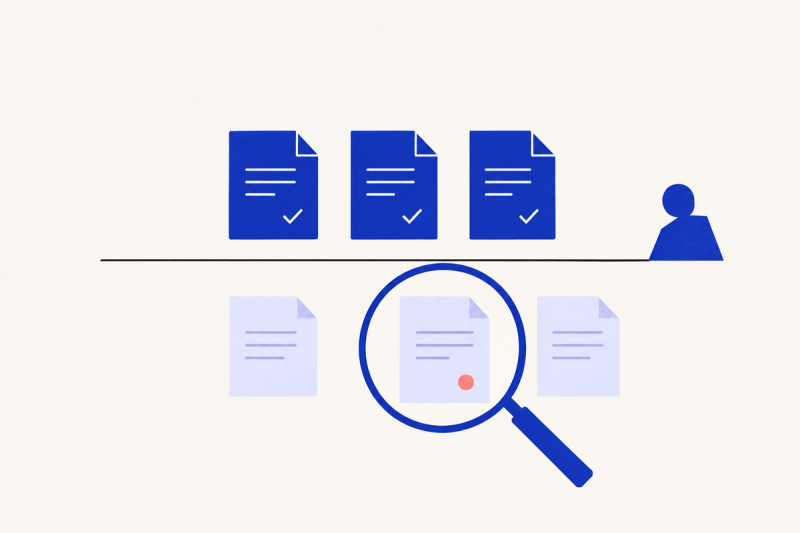
The 3E Check: how to audit any resume screening software in 15 minutes
You don't need a new tool. Paste the top 10 names into a Google Sheet and run three tests. It works on any resume screening software, applicant screening software, or sourcing agent you already pay for. Fifteen minutes is the budget because anything longer never gets done on a busy Tuesday.
E1: Evidence
Every name needs one line of reasoning tied to a written criterion for this role.
"Shipped two B2B products" is evidence. "Looks like people you usually pick" is not.
Write the reason in plain facts, not in the tool's vocabulary. "Strong leadership signals" is a label. "Led a team of six through a platform migration" is a reason.
Can't write the line? That name hasn't earned its spot.
E2: Echo
Put the top 10 next to your last 3 to 5 hires. Count the overlaps:
- Same industry.
- Same school.
- Same city.
- Same title pattern.
More than 7 out of 10 matching? The tool is echoing your past, not reading the role.
Echo isn't always wrong. Maybe your last five hires really were the right profile. Fine. Then that resemblance needs a written reason too, so the next hire can break the pattern on purpose instead of by accident.
E3: Exits
Pull 10 random names from just below the cut line. For each one, ask: why did this person drop?
One sentence is enough. No sentence means the rank was a vibe, not a verdict.
Run it on one real role
Pick the open role with the most applicants this week. Build a sheet with four columns: Name, Reason, Matches past hires?, Why dropped?
It takes one coffee. Then read what it shows you:
- Echo high? Rewrite the criteria first.
- Reason blank? Don't trust that rank.
- Exit unexplained? Take a second look.