A Candidate Just Asked Why Your AI Rejected Them. Can You Answer?
Since August 2026, AI screening can't be a black box. If your AI screens someone out, you have to explain why — here's how, without losing speed.

Knoot Admin
September 17, 2026
Content
Your AI screening is faster than your ability to explain it
You trust the match %, but you don't know where it came from
Candidates are asking back now
Nobody logged who decided what
The 3-C Test: three questions every shortlist should survive
Criteria — what did it score against?
Check — which human reviewed it?
Communicate — could you tell the candidate?
The Knoot Angle
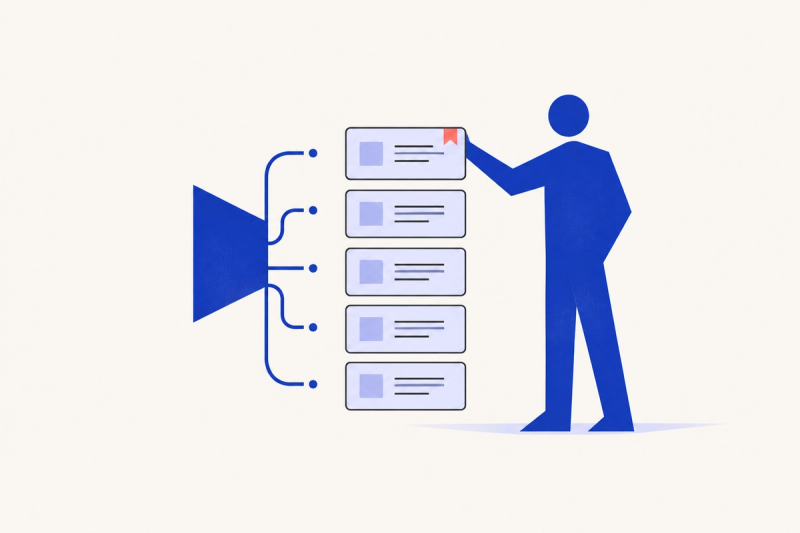
A rejected candidate replies to your email: "Out of curiosity — why wasn't my application selected?"
You used to send a polite non-answer. Not anymore.
As of this August, the EU's AI rules classify hiring tools as "high-risk." In plain terms: if AI helped screen someone out, you — the employer — have to be able to explain what it decided on, and show that a real human reviewed it.
And this isn't only a Brussels problem. If you hire for any role that touches the EU market, the rule reaches you — whether you're in New York, London, or anywhere else.
The question stopped being "is your AI screening fast?"
It's now: "can your AI screening explain itself?"
Your AI screening is faster than your ability to explain it
AI hiring is the default now. You drop in 500 resumes, and seconds later you've got a shortlist of 20 with match scores. Clean.
Speed was never the problem. The problem is what happens when someone asks "why" — and you go quiet.
You trust the match %, but you don't know where it came from
87% match sounds convincing.
Until someone asks: 87% of what? Measured against which criteria? Who set those weights?
If you can't answer, that number isn't evidence. It's faith.
Candidates are asking back now
Candidates know they're being filtered by a machine.
They read the news. They ask directly: "Was I rejected by a person, or by software?"
"Software" is no longer an answer anyone accepts.
Nobody logged who decided what
In March, you hired a Senior Data Engineer. 500 resumes, AI returned the top 20, you sent the shortlist, done.
In June, an audit question lands: why was candidate X — who had the skills — cut in the first round?
You reopen the system. No notes. No criteria on file. No name of anyone who reviewed it.
The AI said no. You didn't ask why. The candidate did.
A shortlist with no "because" is just a list you'll have to defend on your own.

The 3-C Test: three questions every shortlist should survive
From August 2026, the EU treats AI hiring tools as high-risk. You don't need to memorize the law. You just need every AI-assisted decision to answer three questions. Call it the 3-C Test — and you can run it today with nothing but a spreadsheet.
Criteria — what did it score against?
Before the AI ranks anyone, you should know what it's ranking on.
- Which must-have skills?
- What weight on each?
- Who signed off on that list?
If the criteria weren't written down before screening, the match score is just the machine's opinion.
Check — which human reviewed it?
AI proposes. A human decides. And that human has a name.
For every borderline rejection, log it: who looked, when, and whether they agreed or overturned the call.
Not to slow you down. So that when someone asks, you have an answer instead of a shrug.
Communicate — could you tell the candidate?
Simple test: if the candidate asked why they were cut, could you say one true sentence?
"Missing the 3 years of Kafka the JD required" — fine.
"The system scored you low" — not fine.
If you can't explain it to the candidate, you don't fully understand your own decision either.
The Knoot Angle
Explainability isn't a legal chore. It's how you keep your judgment inside a process that keeps automating around you.
That's why Knoot's AI Screening is built to flag, not to auto-reject. It scores each candidate against criteria pulled from your own JD — so it's never screening blind. For every profile it shortlists, it hands you the reasoning: where they match, where they fall short, which risk signals deserve a second human look. It doesn't press reject. You do.
So when someone — a candidate, your manager, or an audit question six months later — asks "why," you're not prying open a black box. The answer is already there, with the name of the person who signed it.
AI gives you the reasons. You make the call.
Content
Your AI screening is faster than your ability to explain it
You trust the match %, but you don't know where it came from
Candidates are asking back now
Nobody logged who decided what
The 3-C Test: three questions every shortlist should survive
Criteria — what did it score against?
Check — which human reviewed it?
Communicate — could you tell the candidate?
The Knoot Angle