Your AI Résumé Screening Software Is Now 'High-Risk.' That's the Law.
The EU AI Act now classifies AI resume screening software as high-risk. If your screener can't explain its calls, that's a compliance problem — here's the fix.

Knoot Admin
September 30, 2026
Content
The black box you've been trusting is now a liability with a login
You can't explain your own decision
The AI is deciding, not assisting
Six months later, you can't reconstruct anything
The Glass Box Test: three questions your screener has to answer
Question 1 — Can it explain?
Question 2 — Who decides, you or the tool?
Question 3 — Can you prove it?
The Knoot Angle
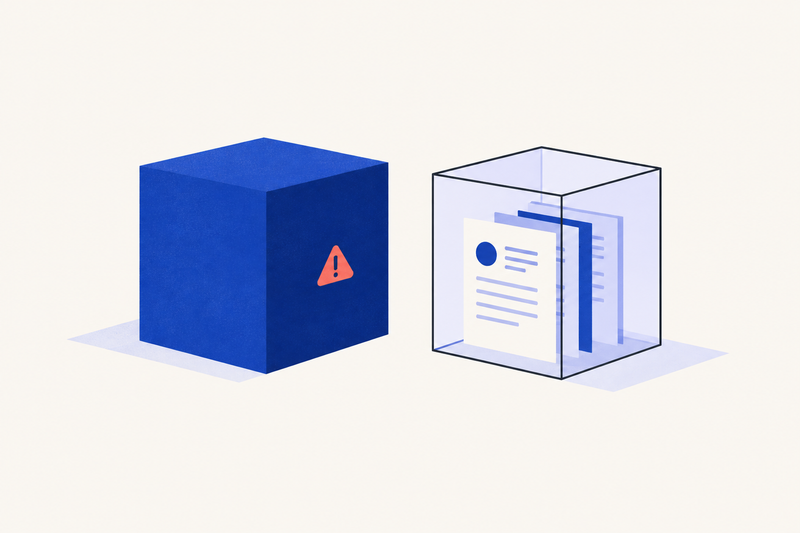
On August 2, 2026, something happened that most recruiters didn't notice: the EU AI Act's high-risk rules came into force. And AI resume screening software — the thing you use every day to cut a stack of applications down to a shortlist — is on the list.
Not "coming soon." Live. Right now.
If your company hires anyone in Europe, the AI reading résumés on your behalf now sits in the same legal category as AI used in healthcare and critical infrastructure. And the question the law asks is blunt: when your AI rejects a candidate, can you explain why?
If the honest answer is "let me ask the vendor," you have a problem.
The black box you've been trusting is now a liability with a login
For two years the whole industry chased speed. A tool that filtered 500 CVs in five minutes was a good tool. Nobody asked how it filtered.
Now you have to ask. Here are the three places it hurts.
You can't explain your own decision
A rejected candidate replies: "Can you tell me why my application wasn't considered?"
You used to wave it off. Now, if they're in the EU, they have a right to know the logic behind the decision — and you have an obligation to answer.
"The system scored you 62%" isn't an explanation. It's a number.
The AI is deciding, not assisting
The law is explicit: there must be meaningful human oversight. A hiring decision can't run fully on autopilot.
But be honest — when the tool hands you a shortlist of 10, do you actually review the 490 it dropped? Or do you trust the list?
If you trust the list, you're not the one deciding. The tool is. And a tool that decides on its own is precisely what the law now says needs a human standing over it.
Six months later, you can't reconstruct anything
The law wants a record: who decided, on what criteria, and when.
Most screeners just return a result and forget it. No log, no reasoning, no trail.
When a dispute lands — or an auditor knocks — all you've got is an empty shortlist and your own memory. Speed felt free for two years. It wasn't. You were just paying the bill later.
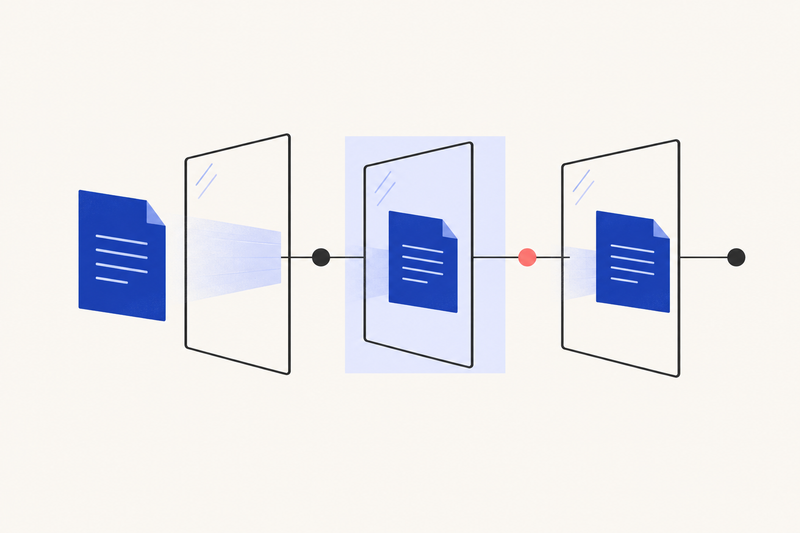
The Glass Box Test: three questions your screener has to answer
You don't need a lawyer to know whether your tool is safe. You need three questions. Call it the Glass Box Test — because the opposite of a black box isn't "smarter AI," it's a box you can see straight through.
It works on any tool. It even works on a manual process. Run your current setup through it before an auditor does it for you.
Question 1 — Can it explain?
For every candidate it drops, can the tool tell you why in language a human can read?
Not a score. A reason: which skill was missing, where the experience didn't line up, which criterion failed.
If the only explanation is a percentage, you've failed the test.
Question 2 — Who decides, you or the tool?
AI is allowed to suggest. AI is not allowed to reject.
The line is simple: do you actually look at the flagged profiles before they're cut, or do you rubber-stamp the shortlist?
A compliant process is one where a human always presses the final button — and knows what they're pressing.
Question 3 — Can you prove it?
Three months from now, if someone asks "why was candidate X dropped and Y kept," can you reconstruct the story?
What the criteria were. Who signed off. What the AI suggested, and what the human changed.
If it isn't recorded, then as far as the law is concerned, it never happened. A decision you can't reconstruct is a decision you can't defend.
Three questions. If your tool fails even one, the problem isn't compliance. The problem is you're hiring without really knowing what you're doing.
The Knoot Angle
For a long time, "AI screening" was sold as a magic button: drop CVs in, get a shortlist out, think as little as possible. The EU AI Act just turned that "think as little as possible" into a liability.
This is exactly the philosophy AI Screening at Knoot was built on.
Knoot's AI Screening doesn't reject anyone. It flags and ranks — comparing each candidate against the criteria pulled from your JD, then giving a reason for every profile it surfaces: which skills match, where the experience is thin, what deserves a second look. It raises risk signals too — overlapping timelines, skill claims that don't match the work history — but it always leaves the judgment to you.
Put another way: every decision has a reason, and every reason is readable. Not because a regulation forced it, but because that's how honest hiring should have worked all along.
Let AI handle the reading. You handle the call. And this time, you can explain why.
Content
The black box you've been trusting is now a liability with a login
You can't explain your own decision
The AI is deciding, not assisting
Six months later, you can't reconstruct anything
The Glass Box Test: three questions your screener has to answer
Question 1 — Can it explain?
Question 2 — Who decides, you or the tool?
Question 3 — Can you prove it?
The Knoot Angle