Your AI Just Ran a Week of Recruiting. You Have No Idea What It Did.
Agentic AI recruiting now runs sourcing, screening, and scheduling on its own. Here's how to keep visibility over what your agents actually do.

Knoot Admin
September 15, 2026
Content
The problem with AI recruiting: the more your agents do, the less you see
Old AI asked. New AI doesn't.
Every agent owns a corner. Nobody owns the whole.
You trust agents like coworkers — but agents don't do standup
When it goes wrong, you own it — not the agent
You have the data. You don't have the picture.
The fix: the 3-Light Rule so you never lose your agents
Consolidate: one screen, not five logs
Trace: every action answers "why"
Live: see it happen, not on Friday
The Knoot Angle
Last year, AI recruiting only made suggestions. You clicked. It ran.
This year, it clicks for itself.
Agentic AI now sources candidates, sends outreach, screens the replies, and books interviews — without you triggering a single step. You hand it a goal, it walks the whole path.
Sounds like the dream. Until Monday morning, when your hiring manager asks: "Where's that candidate?"
And you realize you don't know.
Your agent messaged 40 people. Cut 12. Booked 3. While you slept. Not one of those forty names ever crossed your screen.
You can't manage what you can't see.
The problem with AI recruiting: the more your agents do, the less you see
This isn't the "AI takes your job" fear. It's a quieter one: you keep the job, but lose sight of the job you're doing.
Old AI asked. New AI doesn't.
Old automation waited for your click. Every step passed through your hands.
Agentic AI decides when to act and when to stop.
Faster, sure — but every action is now a decision you never watched happen. The tools got an upgrade. Your line of sight got a downgrade.
Every agent owns a corner. Nobody owns the whole.
One agent sources. One runs outreach. One schedules.
Each works fine inside its own lane.
But your pipeline now lives scattered across five logs that never talk to each other. Stitching them into one story is your job — and nobody budgeted you the time to do it.
You trust agents like coworkers — but agents don't do standup
Coworkers report back. Agents don't.
They act, then move on.
"87% match, 3 interviews booked" — but where are the other 40? Who got cut? Why?
A Senior Backend Java req: the agent messaged 40 candidates, rejected 12, booked 3 — overnight, with no notes you'd actually recognize. You inherit the outcome, but not the reasoning.
When it goes wrong, you own it — not the agent
An agent rejects a candidate. That candidate complains.
Your hiring manager turns to you and asks why. "The AI decided" is not an answer that survives the room.
You're accountable for decisions you didn't see and can't explain. Automation moved the speed up; it left the accountability exactly where it was — on you.
You have the data. You don't have the picture.
You've got 200 lines of activity log.
You still can't answer your hiring manager in five seconds.
That's not a data problem. It's a visibility problem. You're in a control room with the lights off — every button is there, you just can't see which one is lit.
Agent runs = fast.
You watch = too late.
HM asks = you freeze.
The fix: the 3-Light Rule so you never lose your agents
The goal isn't to make the agents do less. It's to let you see more. The agents already work. The missing piece has never been their output — it's your window into it.
Not to slow the AI down — to keep yourself in the driver's seat. Three lights, and you can switch them on with nothing but a spreadsheet.
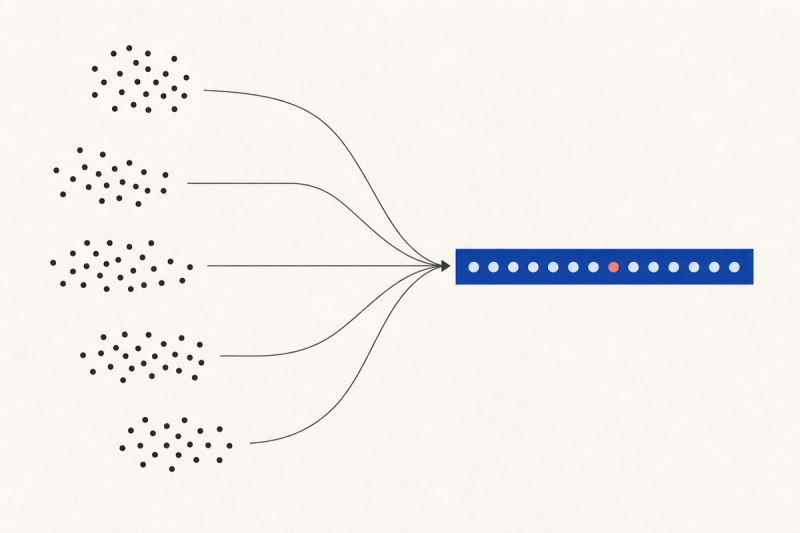
Consolidate: one screen, not five logs
Don't let each agent live in its own corner.
Pull sourcing, outreach, screening, and scheduling into one view.
Even a shared Google Sheet beats five open tabs. What you need isn't more data — it's one place to see all of it.
Trace: every action answers "why"
Agent cut 12 candidates? You need the reason.
Not to micromanage each one — to trust the batch, and to have an answer when you're asked.
An action with no reason is a black box. And you can't audit a black box, can't defend it, and can't learn a thing from it.
Live: see it happen, not on Friday
A report is the past. You need the present.
A great candidate slips at 2pm Tuesday — you need to know at 2pm Tuesday.
Not in the weekly wrap-up, after it's already over and there's nothing left to fix. Visibility that arrives late isn't visibility. It's a post-mortem.
The Knoot Angle
Automation without visibility isn't progress. It's just losing control faster.
The best recruiters in the agentic era aren't the ones running the most agents. They're the ones who always know what their agents are doing.
That's why Knoot built its Activities Dashboard.
It pulls every recruiting activity into one screen — new candidates, pipeline status, the metrics that actually matter. It updates in real time, so nothing slips through the cracks. It's the morning-coffee view: what just happened, what's pending, what's about to slip — all in one glance.
It's not another report. It's knowing what's happening right now.
Let your agents run. You keep the watch.
Content
The problem with AI recruiting: the more your agents do, the less you see
Old AI asked. New AI doesn't.
Every agent owns a corner. Nobody owns the whole.
You trust agents like coworkers — but agents don't do standup
When it goes wrong, you own it — not the agent
You have the data. You don't have the picture.
The fix: the 3-Light Rule so you never lose your agents
Consolidate: one screen, not five logs
Trace: every action answers "why"
Live: see it happen, not on Friday
The Knoot Angle