Stop Trying to Catch AI in Interviews. You Already Lost That Race.
Candidates cheat live interviews with AI copilots and deepfakes, and catching them is a coin flip. The 3 Anchors shift trust from one call to a track record.

Knoot Admin
August 23, 2026
Content
The detection race is one the other side keeps winning
The copilot runs in the background, and you can't see it
Catching it is barely better than a coin flip
The harder you clamp, the faster honest people leave
Don't verify in the room. Build trust before the room.
Anchor 1 — Depth, not answers
Anchor 2 — History, not a moment
Anchor 3 — Relationship, not a stranger
The Knoot Angle
You're interviewing a senior frontend candidate. Forty-five minutes, smooth. Every answer is clean, tight, textbook-correct.
Then you ask: "Tell me about a time you broke production. What did you do?"
The screen goes still for four seconds.
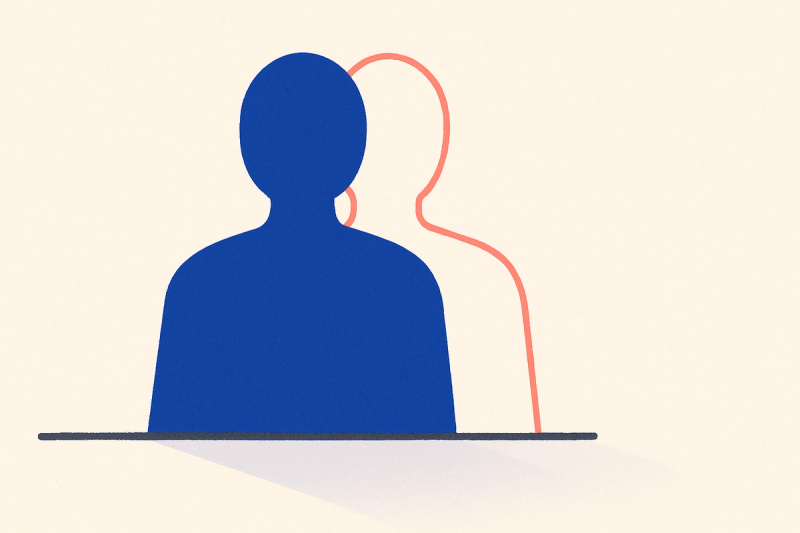
That pause is the sound of an answer being typed somewhere off-camera.
In 2026, candidates don't cram before interviews anymore. They run an AI copilot in the background that hears your question and feeds them the answer on screen. Some use an earpiece. Some use deepfake video that swaps the face on camera.
And most recruiters' first instinct is to clamp down — proctor harder, watch closer, buy a detection tool.
That's the moment you enter a race you can't win.
The detection race is one the other side keeps winning
Every time you find a new tell, they find a new way around it. You buy a detector; they buy a better copilot.
The copilot runs in the background, and you can't see it
A real-time overlay. An earpiece reading a script. Deepfake video. Smart glasses.
The person in front of you may not be the person who shows up on day one.
Catching it is barely better than a coin flip
Humans spot a deepfake about as well as they'd guess.
For technical roles, "suspected of using AI" is close to the default state now.
Worse: plenty of flagged candidates still move forward — because you're not sure, so you let it slide.
The harder you clamp, the faster honest people leave
Heavy proctoring, screen-shares, "pan your camera around the room."
Your best, most honest candidates are the first to find it insulting and drop out.
You end up filtering out exactly the people you wanted to keep.
Let's say it plainly: the 45-minute interview just stopped working as proof. It's an open-book test now — and you don't know who's sitting next to the candidate.
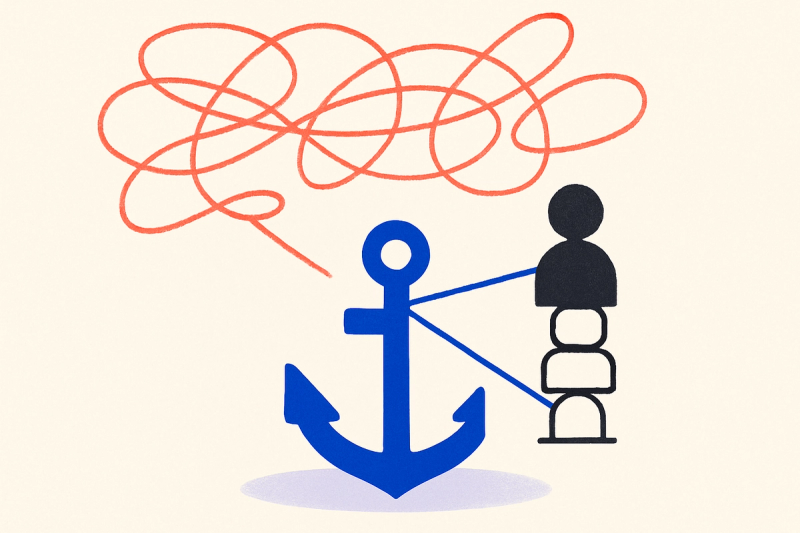
Don't verify in the room. Build trust before the room.
If a 45-minute call is no longer trustworthy, stop staking everything on it.
Shift the weight to what a copilot can't fake: depth, history, and relationship.
Call it the 3 Anchors — three things that keep your judgment from drifting with the tech.
Anchor 1 — Depth, not answers
A copilot is great at standard questions. It's weak on the messy middle.
Don't ask "how does React work." Ask "tell me about a decision you got wrong, and what it cost."
Then dig three layers: why that choice, what you were thinking, what you'd do differently.
Machine answers are fluent but generic. Real people have specific scars.
Anchor 2 — History, not a moment
A copilot can win one interview. It can't reconstruct a track record.
Favor candidates you've seen over time: a past application, an earlier round, a referral with someone's name behind it.
One data point is easy to fake. A pattern isn't.
Anchor 3 — Relationship, not a stranger
The safest hire is rarely a cold profile that landed yesterday.
It's someone already in your network — you've talked, you've assessed, you've kept in touch.
For them, the interview isn't first contact. It's confirmation.
All three anchors share one requirement: a place that remembers your candidate history. Without it, every hire starts with a stranger.
The Knoot Angle
In a market where anyone can perform flawlessly for 45 minutes, a recruiter's edge isn't catching the fakes. It's knowing the candidate before the call.
That's why a Private Talent Pool matters more than ever. Instead of leaving the people you've spoken to scattered across Drive and your inbox, Knoot keeps them in one place:
- Notes and interaction history: every candidate carries the context of your last conversation — who they are, what they're strong at, what they said.
- Sorted by role and interest level: when a role opens, you pull a list of people you already know instead of starting from zero.
- Retrieval in seconds: an urgent shortlist doesn't have to mean a shortlist of strangers.
The deeper your pool, the fewer times you bet an entire decision on a call where the other side might be reading off a script.
A copilot can fake 45 minutes. It can't fake a relationship.
Content
The detection race is one the other side keeps winning
The copilot runs in the background, and you can't see it
Catching it is barely better than a coin flip
The harder you clamp, the faster honest people leave
Don't verify in the room. Build trust before the room.
Anchor 1 — Depth, not answers
Anchor 2 — History, not a moment
Anchor 3 — Relationship, not a stranger
The Knoot Angle