Every JD Now Demands 'AI Fluency.' Nobody Can Score It.
'AI fluency' is on nearly every job description and almost never defined. Here's how to break it into three weighted tiers you can actually grade.

Knoot Admin
September 15, 2026
Content
Why "AI fluency" is a phantom requirement
Everybody writes it. Nobody scores it.
"Uses AI" isn't a skill
Blind criteria, bad hires
Break "AI fluency" into three tiers you can grade
Tier 1 — Aware: knows the tools exist
Tier 2 — Applied: has used AI on real work
Tier 3 — Judgment: knows when NOT to trust it
The Knoot Angle
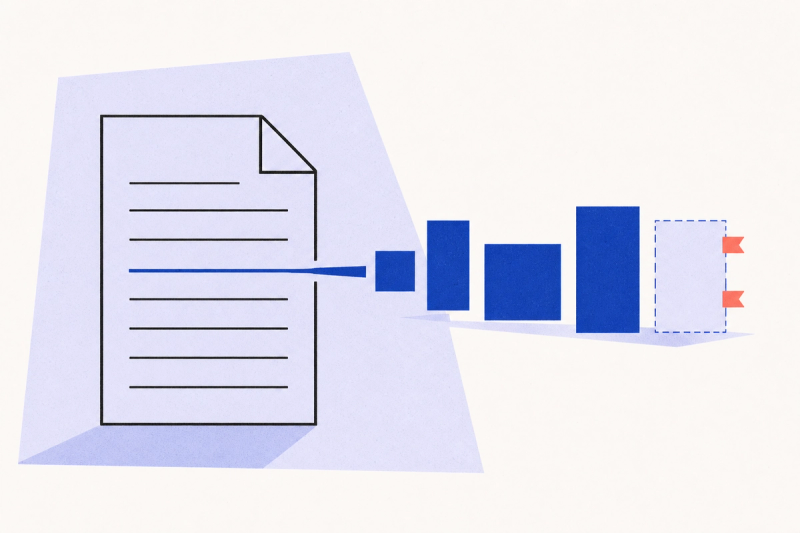
Open any job description you posted in the last three months. Odds are there's a line like "proficient with AI tools" or "AI fluency a plus."
Now be honest: how do you score that line?
A candidate says "I use ChatGPT every day" — pass or fail? Is someone who writes a three-paragraph prompt better than someone who knows when not to trust the output?
Here's the uncomfortable part: "AI fluency" is now the most common requirement on job descriptions, and the least defined.
You're hiring for a skill your own JD can't describe.
Why "AI fluency" is a phantom requirement
Hiring in 2026 has a quiet paradox: everyone demands AI fluency, nobody can grade it.
Everybody writes it. Nobody scores it.
"AI fluency" sounds current, so it lands on the JD by reflex.
The hiring manager nods. You nod. Nobody stops to ask what "fluent enough" means for this role.
One line, ten different readings.
"Uses AI" isn't a skill
Product Marketer role. The JD says "proficient with AI tools."
In the interview, the candidate name-drops ChatGPT and demos a slick prompt. Hired.
Three weeks in, they ship a market report full of numbers the model invented. Nobody checked.
They were fluent at typing prompts. Blind at knowing when the machine was wrong.
Starting the engine isn't the same as driving.
Blind criteria, bad hires
When the bar is undefined, even AI Screening can't save you — you're asking it to filter on something that was never specified.
Garbage in, garbage out.
You're not short on candidates who use AI. You're short on a definition of "use" you can actually grade.

Break "AI fluency" into three tiers you can grade
Don't cut the "AI fluency" line from your JD. Break it into three tiers, each with its own weight. Call it the 3-Tier AI Fluency Ladder: Aware, Applied, Judgment.
Tier 1 — Aware: knows the tools exist
Knows ChatGPT, Claude, and Copilot exist and roughly what they're for.
This is the floor. Low weight.
Almost everyone clears it in 2026 — so stop paying for it.
Tier 2 — Applied: has used AI on real work
Not "I've used it," but "I used it for X, it saved me Y, and here's what came out."
Ask for one concrete example where AI doubled their speed.
Medium weight. This is where candidates actually separate.
Tier 3 — Judgment: knows when NOT to trust it
Knows where the model hallucinates, what needs verifying, when to do it by hand.
A Tier 3 candidate treats AI output as a draft, never as fact.
Highest weight. This is what "fluency" actually means.
Once you have the three tiers, assign a percentage per role. Junior content: Applied weighs more. Analyst or PM: Judgment weighs the most.
Fluency isn't knowing how to prompt. It's knowing when to ignore the answer.
You don't need a tool for this. One column in a sheet, three tiers, three weights — that's enough to start.
The Knoot Angle
A JD is a wish list. The recruiter's job is to turn it into something gradable — before the first candidate walks in.
That's why Knoot built JD Analyzer. Paste in the JD and it breaks that "AI fluency" line — and every other line — into must-have, nice-to-have, and bonus criteria, each with its own weight.
It turns vague wishes into concrete criteria, so you see at once which lines are too fuzzy to grade. You keep full control to edit and reweight — AI suggests, you decide. And that criteria set feeds your screening later, so you never filter blind.
JD Analyzer doesn't write your JD. It just makes sure every line in it is something you can actually score.
Content
Why "AI fluency" is a phantom requirement
Everybody writes it. Nobody scores it.
"Uses AI" isn't a skill
Blind criteria, bad hires
Break "AI fluency" into three tiers you can grade
Tier 1 — Aware: knows the tools exist
Tier 2 — Applied: has used AI on real work
Tier 3 — Judgment: knows when NOT to trust it
The Knoot Angle