A Job Post Used to Pull 80 Applicants. Now It Pulls 800.
A job post now pulls 800 AI-written applications. Here's why your talent pool beats your inbox in 2026 — and the 3R method to build one that actually works.

Knoot Admin
September 18, 2026
Content
Why posting a job now feels like switching on a bug light
Volume up, signal down
Your fix — adding friction — backfires
The scenario every recruiter now knows
The good ones never even show up
Make your talent pool the front door, not the fallback
Retain — keep every near-miss
Refine — store it so you can search it in 60 seconds
Reactivate — hit the pool before you open the funnel
The Knoot Angle
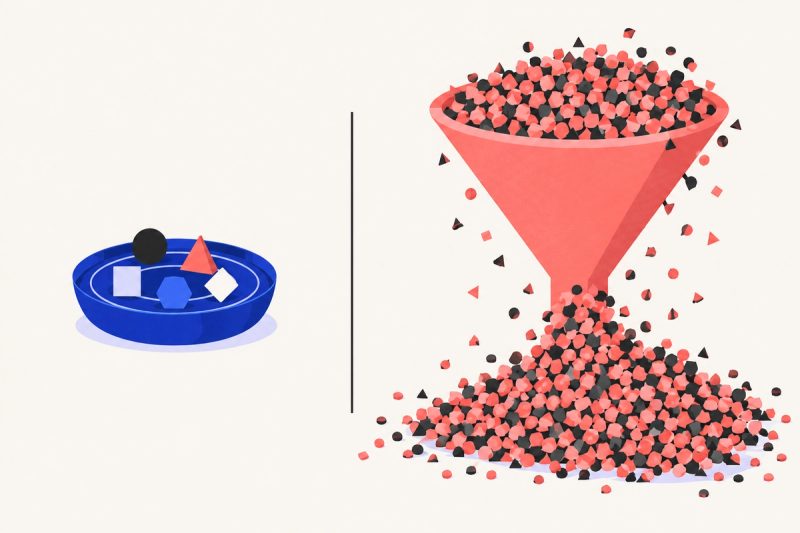
Two years ago, a job post pulled 80 applicants.
This year it pulls 800.
That sounds like a good problem. It isn't.
Most of those 800 were written by AI, fired off in bulk, tuned to hit every keyword in your JD — and almost none of those people actually want the job.
The ones you want? They're passive. They don't apply. Your post never reaches them; it drowns in a feed with a thousand others.
Here's the uncomfortable part: your inbound funnel is broken. More applicants doesn't mean more choice. It means less signal.
The recruiters staying sane this year didn't get faster at sorting the flood. They stopped starting from it.
Why posting a job now feels like switching on a bug light
An open req has turned into a bug light.
You flip it on. Within hours, every bot within fifty miles swarms it.
You're not attracting candidates. You're attracting volume.
Volume up, signal down
- Résumés written by AI, keyword-perfect against your JD.
- Real skill is harder to verify than it's ever been.
- You read 400 profiles to find 4 humans.
Your fix — adding friction — backfires
Knockout questions. Take-home tests. One more screening round.
The bots clear them anyway.
The strong people — passive, busy, spoiled for options — just leave.
You filter out the exact people you were trying to keep.
The scenario every recruiter now knows
One Senior Backend req.
48 hours later: 600 applications.
You know 90% are mismatched or machine-written, but you open each one anyway — just in case.
Day five, your shortlist still isn't three real humans deep. The hiring manager asks what's taking so long.
You don't have a candidate shortage. You have a candidate flood — and a flood hides the person you need just as well as a drought does.
The good ones never even show up
The engineer you'd fight to hire isn't refreshing job boards.
She's employed, heads-down in a sprint, three recruiter DMs deep already.
A public post is invisible to her. It only reaches the people with time to apply to everything — which is rarely the people you want.
The flood isn't just noise. It's noise that actively crowds out the signal.
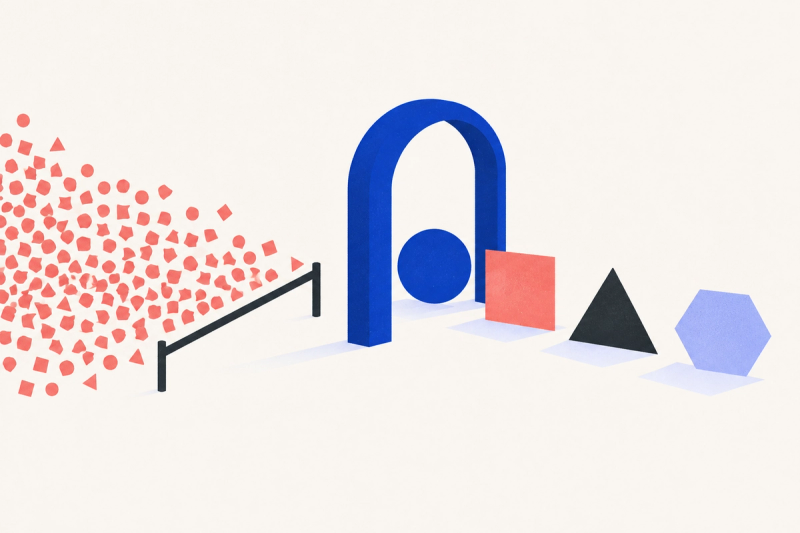
Make your talent pool the front door, not the fallback
Here's the shift: your talent pool isn't where old résumés go to wait. It's the first place you look — before you post anything public.
The method is simple enough to run in a spreadsheet. Call it the 3R pool: Retain, Refine, Reactivate.
Retain — keep every near-miss
Every candidate who passes through you has value:
- The runner-up in the final round.
- The strong one you couldn't hire when headcount vanished.
- People you've sourced and spoken to before.
- Referrals you never used.
Don't let them sink into a Drive folder and disappear.
Most of these people already liked you. They took your call, sat your interview, replied to your message. That relationship is the one thing the flood can't manufacture — so stop throwing it away every time a req closes.
Refine — store it so you can search it in 60 seconds
A pool is only as strong as its data. Each profile needs:
- Clear skills.
- Match level for the role.
- Notes from your last contact.
- When you last spoke.
Storage isn't a pool. A pool is something you can search — that's the difference between a talent pool and a talent pipeline you can never actually pull from.
Reactivate — hit the pool before you open the funnel
Before you post publicly, ask: do I already know someone?
One message to a person you've spoken with beats 600 strangers.
The public post still has its place — but it's the last move, not the first. You open the funnel once your pool comes up short, not before. That order alone cuts the flood you have to wade through in half.
You don't need 600 applicants. You need six people who already know who you are.
The Knoot Angle
In 2026, a talent pool isn't a nice-to-have. When the public funnel becomes noise, your own pool is the only clean channel left. The recruiters who feel calm right now aren't the ones with the best screening filters — they're the ones who rarely have to touch the flood at all, because they built somewhere better to start.
That's exactly what Knoot's Private Talent Pool is built for.
Bulk-upload up to 50 résumés at once and let AI parse and structure them in minutes, so every near-miss lands in your pool instead of a forgotten folder. Search by keyword and filter to pull a shortlist from people you already know, not strangers you have to vet from zero. Notes and interaction history live next to each profile, so you remember why this person is worth a call. It's your asset — not a public inbox anyone can flood.
The funnel gives you volume. Your pool gives you the right people.
Content
Why posting a job now feels like switching on a bug light
Volume up, signal down
Your fix — adding friction — backfires
The scenario every recruiter now knows
The good ones never even show up
Make your talent pool the front door, not the fallback
Retain — keep every near-miss
Refine — store it so you can search it in 60 seconds
Reactivate — hit the pool before you open the funnel
The Knoot Angle