AI Won't Replace Recruiters — What Does It Replace?
AI won't replace recruiters, but it's already replacing part of the job. Here's the line between what AI does and the calls only you can make.
Knoot Admin
Knoot Admin
July 27, 2026
Every conversation about AI in hiring opens with the same question: "So… is AI going to replace recruiters?"
Wrong place to start.
AI isn't replacing you. But it's already replacing part of your job, and honestly, you should be glad. It took the worst part. The part that keeps you at your desk until 8pm, eyes glazing over on CV number 173, still unsure whether you missed someone good.
So here's the better question. Not "will AI replace recruiters."
But: what exactly is AI replacing — and what will it never touch?
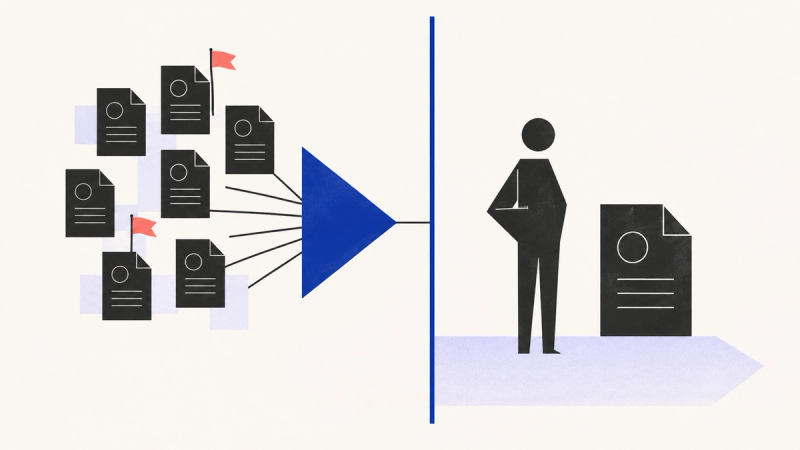
Everyone's having the wrong argument
"AI is coming for our jobs" makes a great headline. It also hides a far less dramatic truth.
You've been doing the machine's job
Picture a normal Tuesday.
A Senior Backend role opens. 200 CVs land in three days. You open each one, scan every line, cross-check against a three-page JD, cross out names, add notes, rank the rest.
By CV number 100, your brain quietly slips into power-saving mode. CV 173 reads exactly like CV 12, except you can't remember who CV 12 was.
That's not expertise. It's manual labor wearing an expertise costume.
You've been a human ATS.
"Replace" was never all-or-nothing
People argue like there are only two outcomes: AI replaces recruiters entirely, or AI is useless.
Reality sits in the middle, and it's more interesting.
Your job isn't one block. It's layers stacked on each other:
- Reading and matching.
- Catching odd signals.
- Understanding people.
- Persuading and closing.
AI eats the bottom layers. The top ones, it can't reach.
The catch? Most recruiters spend 80% of their time in exactly the layers AI does faster.
What AI replaces, and what it doesn't
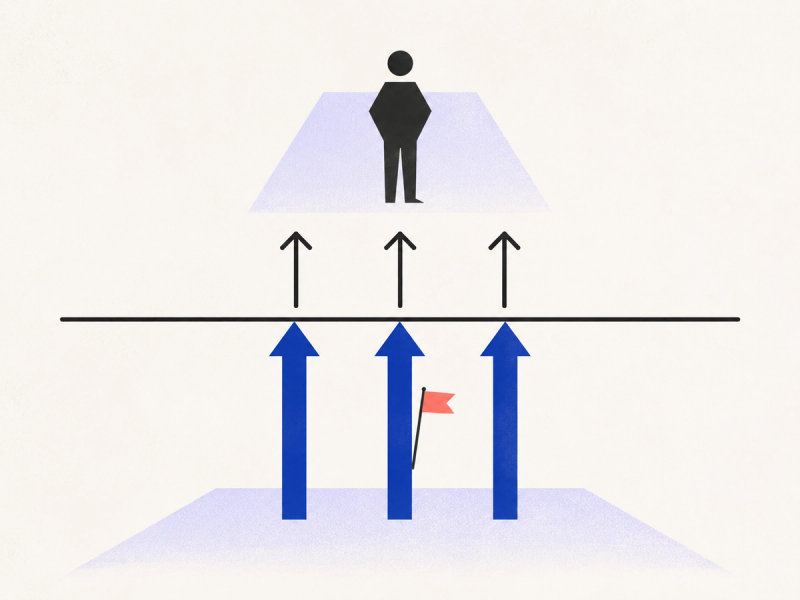
The cleanest way to answer: split your job into pairs of verbs. Call them the 3 lines.
Each line has an AI side and a you side. They sound alike. They're not.
AI reads. You understand.
AI reads 200 CVs in seconds. No fatigue, no skipped lines.
But reading isn't understanding.
A candidate who switched jobs four times in three years reads as "job hopper" to AI. You're the one who knows three of those companies folded. That's not a commitment problem.
AI sees words. You see a person.
AI filters. You choose.
AI matches each profile against your JD criteria, scores a match %, ranks them.
But "highest match" doesn't mean "best hire."
Your 92% match might be bored in three months. Your 78% match might stay five years.
Filtering is mechanical. Choosing needs a head that weighs trade-offs.
AI flags. You decide.
This is the part people get most wrong.
AI is great at catching anomalies:
- Overlapping timelines.
- Skill claims that outrun experience.
- Achievements stretched a little too far.