Why Zalo Recruiter Groups Aren't Talent Communities
Every strong Vietnamese candidate sits in 8-12 recruiter group chats. Why Zalo groups aren't real Talent Communities, and the 3 things that are.

Knoot Admin
May 17, 2026
Content
How Many Zalo Groups Is Your Candidate In Without You Knowing?
Why Zalo groups are NOT Talent Communities
Nobody controls quality
No clear value exchange
No privacy
No context
"Multiverse sourcing" — the Vietnamese recruiter disease
A real community needs three things
1. Controlled access — who's in, who's out, who can do what
2. Fair exchange — contribution equals value
3. Context preserved — candidate history doesn't reset on every share
The Knoot Angle
How Many Zalo Groups Is Your Candidate In Without You Knowing?
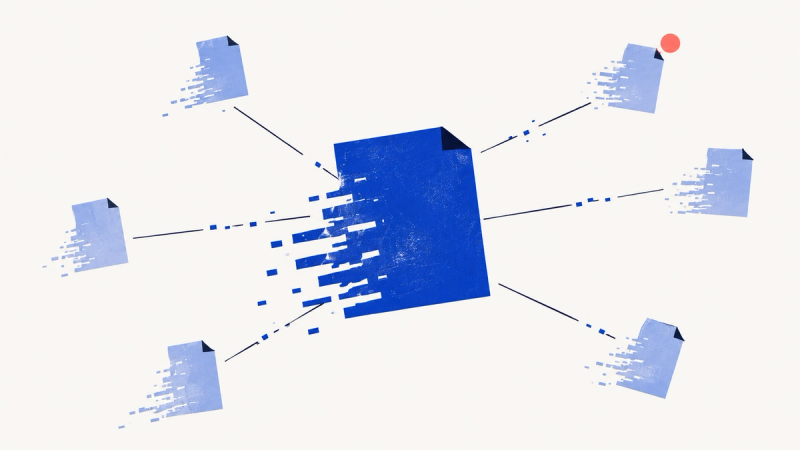
Zalo groups, Facebook groups, Telegram channels — Vietnamese recruiters share CVs daily, yet nobody truly "owns" the candidate. Here's why.
You just sent an "exclusive" Senior Backend Java CV to your client.
The next day, the same CV shows up in a Zalo recruiter group — shared by someone else. By the evening, it's circulating in a Facebook headhunter community. Two days later, the candidate calls you: "I've received interview invitations from four different companies, through four different recruiters, for the same role."
You don't own this candidate. You never did.
And you're not alone. Every strong candidate in Vietnam sits inside an average of 8–12 recruiter chat groups — and no single recruiter knows all of them.
Why Zalo groups are NOT Talent Communities
We've normalized using group chats as our CV exchange. Free, fast, no overhead. But look closer and you'll see this isn't a community — it's an online flea market for CVs.
Nobody controls quality
Anyone can join. Anyone can share. CVs from 2022, candidates who onboarded somewhere else three months ago, fake profiles from cloned accounts — all sit in the same PDF that gets forwarded again and again.
You have no idea how many hands this CV has passed through before reaching you.
No clear value exchange
"Share now, I'll share back later." That's the unspoken deal.
But:
- Heavy contributors get nothing measurable.
- Lurkers who only consume pay nothing.
- People uploading high-quality CVs lose their effort in silence.
This is a goodwill economy. Every goodwill economy eventually collapses.
No privacy
Original CVs land in groups of 200–500 strangers. Phone numbers, personal emails, old salaries — fully exposed. The candidate has no idea their resume is sitting in 10 different groups.
This isn't just a professional ethics problem. In many markets, it's a legal one (GDPR, PDPA).
No context
You see the CV. You don't see:
- Whether a previous recruiter already contacted them
- Where they already interviewed
- Why they left their last role
- What kind of role they're actually looking for
Every recruiter approaches the candidate as if it's first contact — and the candidate has been "first-contacted" eight times this week.
"Multiverse sourcing" — the Vietnamese recruiter disease
You're sourcing for 5 roles. To find candidates, you live in:
- 6 Zalo recruiter groups
- 4 Facebook headhunter communities
- 2 Telegram channels
- A few Discord servers
- Your team's ATS
- One old Excel file
- LinkedIn inbox
You're not slow. You're multiverse-sourcing — trying to exist in seven realities at once.
Each reality has its own CV pool, its own rules, its own trust level. And you — one person with one brain — are trying to remember who shared what, where, when.
By end of day you're exhausted. Not because you did a lot. Because you did the same thing in seven places.
A real community needs three things
If group chats aren't a real Talent Community, what is?
Here's a simple framework you can use to evaluate any "community" before you join it.
1. Controlled access — who's in, who's out, who can do what
Not everyone should see every CV. Not every recruiter should be allowed to share. Rules need to exist, and rules need to be enforced — not just pinned at the top of a group where nobody reads them.
2. Fair exchange — contribution equals value
Recruiters who share quality CVs should be credited. Recruiters who only consume should pay something. Cash, points, credit — the unit matters less than the fact that it's measurable.
Without a measure, the generous lose and the freeloaders win.
3. Context preserved — candidate history doesn't reset on every share
A candidate isn't a PDF. They have an interaction history, previous recruiter feedback, updated availability. A real community keeps that context attached — instead of wiping the slate clean every time the file gets forwarded.
Controlled access. Fair exchange. Context preserved. Hold any "community" up to those three. If it fails on any, it's not a community. It's a marketplace pretending to be one.
The Knoot Angle
Recruitment is, at its core, a collaboration between people. The problem is when that collaboration happens on tools that were never designed for it — Zalo, Facebook, Telegram — both recruiters and candidates lose.
Knoot's Talent Community was built for exactly this — not to replace the relationships between recruiters, but to turn those relationships into something with structure.
- Controlled profiles: Every CV is AI-parsed and structured. The candidate's sensitive info stays hidden until a recruiter genuinely needs it and unlocks the profile.
- AI Quick Search across the pool: No more scrolling through 12 chat groups. One natural-language query — "backend Java with 5 years, fintech background in Hanoi" — and AI sweeps the entire community.
- Point-based exchange: Upload a quality CV, earn points. Spend points to unlock the CVs you need. Every time someone unlocks a CV you shared, you earn commission points. Contribution is measurable, not based on goodwill.
- Context stays attached: Comments, feedback, interaction history — none of it resets when the CV changes hands.
You don't have to leave your Zalo groups today. But you should have a second home — somewhere your best candidates won't be forwarded out of your control.
Zalo groups are where CVs go missing. Talent Community is where CVs have an owner.
Content
How Many Zalo Groups Is Your Candidate In Without You Knowing?
Why Zalo groups are NOT Talent Communities
Nobody controls quality
No clear value exchange
No privacy
No context
"Multiverse sourcing" — the Vietnamese recruiter disease
A real community needs three things
1. Controlled access — who's in, who's out, who can do what
2. Fair exchange — contribution equals value
3. Context preserved — candidate history doesn't reset on every share
The Knoot Angle